
Created in partnership with independent creative agency, Worth Your While, ‘Reject the Rejections’ calls for greater transparency and human oversight in automated recruitment
- 70% of ethnically diverse job seekers have altered or hidden something from their CV including their country of origin, faith and even their name out of fear software or AI assistants would reject them (vs 57% of white candidates).
- Three quarters (75%) of job seekers don’t know that they may have a legal right to request a human review of an automated rejection – rights most employers are failing to honour.
- 42% of job seekers have received identical or near-identical rejection emails from different employers, a sign the same software may be screening out the same people everywhere they apply.
- A study of over 100,000 live graduate applications from UCL reveals ethnic minority candidates are disproportionately rejected at the screening stage despite having similar qualifications.
- Reject the Rejections campaign by People Like Us aims to empower rejected job seekers to request a human review, and for employers to disclose the use of automation in their hiring processes.
- Dear [Name] is a powerful short film starring Ebenezer Gyau (Amandaland, Black Mirror, Suspect), built from real rejection lines sent to real ethnic minority candidates.
- Created in partnership with creative agency Worth Your While, and produced by new—land
- Free online email tool enables rejected candidates to easily enquire if automation was used: https://rejections.plu.org.uk/

New research from non-profit People Like Us and Censuswide reveals that automated hiring software now stands between UK jobseekers and work, rejecting candidates within minutes, sometimes before applications have even closed. The impact falls hardest on ethnic minority jobseekers. People Like Us is calling for greater checks and balances on the automation and AI tools reshaping recruitment. Used well, they serve a real purpose in managing huge volumes of applicants, but their use must be disclosed before candidates apply, accountable to a human when challenged, and independently audited for bias.
The survey of 2,000 UK job seekers found that 80% have been rejected in the past two years and of those, nearly three quarters (74%) suspect at least one rejection was generated automatically without a human reading their application. And they may never find out as just 15% of candidates say an employer has told them an automated system was used.
Ethnically diverse candidates are hit disproportionately as they apply for a third more roles than white counterparts, are rejected faster (41% within an hour of applying vs 32%), and are significantly more likely to remove elements of their identity from their CVs to get past automated systems (70% compared to 57%). Erasing parts of identity pre-dates automations and AI with decades of UK research on name bias demonstrating how this has been impacting workers, however automations add speed and scale and remove the person who could be asked why.



In response to the findings, People Like Us have launched Reject the Rejections, a new campaign created in partnership with creative agency Worth Your While. The campaign has several objectives: to raise awareness among rejected job applicants that they may have the right to request a human review of their application if they suspect the decision was made by automation; to urge employers to disclose the use of automation in their hiring processes and commit to independent bias audits; and finally, to call on the government to consider screening transparency laws.
At the heart of the campaign is a powerful 4 minute short film starring British actor Ebenezer Gyau (Amandaland, Black Mirror, Suspect). Directed by critically acclaimed director Amara Abbas through new—land productions, Dear [Name] transforms the language of real rejection emails sent to real ethnic minority candidates into a powerful spoken-word performance about hope, exclusion and the invisible barriers facing talented candidates.
Set inside an anonymous waiting room separated by a two-way mirror, the film follows a talented candidate rehearsing the familiar language of corporate rejection emails. As each carefully worded “thank you for your application” unfolds, the audience hears the internal dialogue those messages leave behind – self-doubt, resilience, frustration and ultimately a challenge back to the system itself.
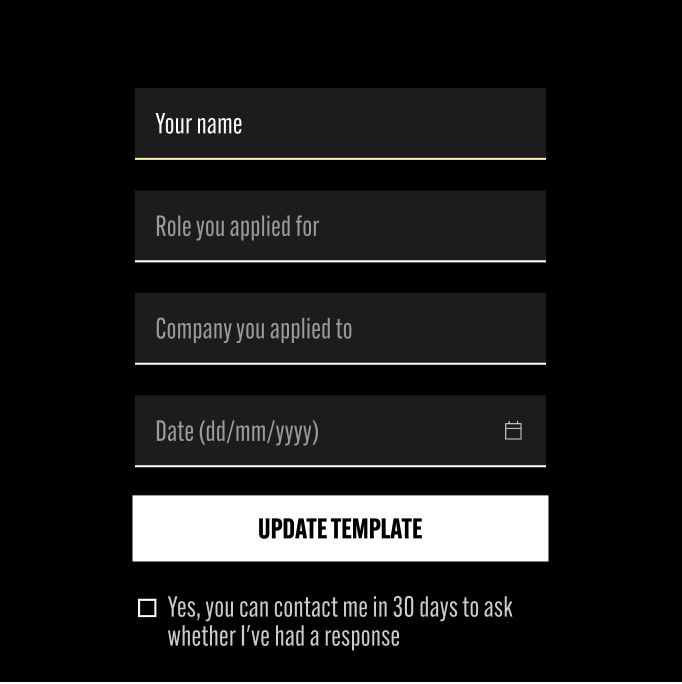
In addition to the film, People Like Us has is arming candidates with a tool to Reject the Rejections, developed with Planes Studio that any rejected candidate can send in just two clicks to ask whether an automation was used on their application and remind job seekers they may have the right to request a human review under existing UK Data Protection laws. The tool is here: https://rejections.plu.org.uk/individuals#request-a-human-review
The findings build on a recent substantial analysis of over 100,000 live graduate applications from UCL which reveal ethnic minority candidates are well represented in application pools for graduate roles but are disproportionately rejected at the initial screening and online testing stage of recruitment despite having similar qualifications. This suggests employer outreach efforts to diversify applicant pools have been successful while adverse impact during recruitment processes remains.


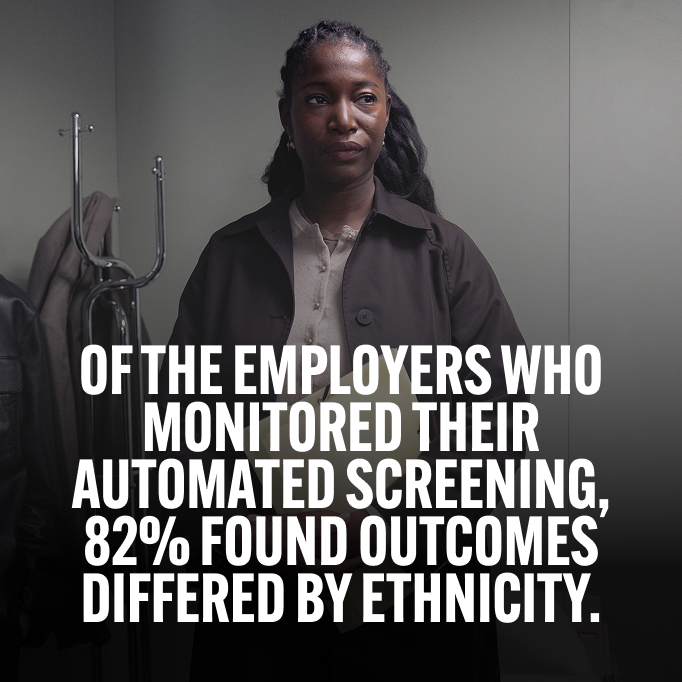
Sheeraz Gulsher, co-founder of People Like Us comments: “Employers aren’t the villains here, most resort to automations in good faith to cope with a surging volume of applicants, and four in ten did it believing they were reducing bias. However, good faith isn’t governance – when 82% of the employers who checked found outcomes vary by ethnicity, ‘we didn’t know’ stops being a defence. The Equality (Race and Disability) Bill gives the Government the vehicle to make transparency the rule to enable fairer access to jobs for all. Automation has a clear role in managing surging application numbers – but checks and balances must keep recruitment equitable for all.”
Tim Pashen, creative director & partner, Worth Your While adds: “When a machine can reject you before a human has even had a chance to see you, efficiency starts to look a lot like exclusion. This work is about putting the human back into human resources, because nobody should be rejected by a system before they are seen.”
Amara Abbas, director, new—land added: “This is a film that is interested in uncomfortable truths and in saying the quiet part out loud. In a world that feels more and more divided with each passing day, I hope this film can function as a way to break down the barriers and to create opportunities for important conversation and connection with one another.”


JCDecaux Community Channel is supporting the campaign over autumn, with an initial run across 19 large-format digital sites in London this Wednesday, generating an estimated 154,000 impressions, ahead of a fuller national campaign launching in November. A 30-second cut of the film will also run as a two-week national cinema campaign in partnership with Pearl & Dean from 2 October, screening alongside major releases including Sense & Sensibility, Heart of the Beast, Digger and Verity.
CLIENT: People Like Us
Client / Co-founder: Sheeraz Gulsher
Client / Co-founder: Darain Faraz
AGENCY: Worth Your While
Creative Director/Partner: Tim Pashen
Creative Director/Partner: Lukas Lund
Design Director/Partner: Carl Angelo
Design Director: Mads Jakob Poulson
Copywriter: Tim Pashen
Creative/Art Director: Oscar Gierup
Chief Strategy Officer: Tali Madsen
Account Manager: Christine Lorentzen
CEO / Client lead: Morten Ingemann
Director & Writer: Amara Abbas
Co-writer: Yasmin Ali
DOP: Magnus Jønck
Lead Actor: Ebenezer Gyau
Casting Director, Lead Actor: Coralie Rose / Road Casting
Production Design: Martha Lieberath & Veronika Bach / Cleo Studio
Costume Designer: Sara Forghani
Editor: Carla Luffe / NIPC TV
Colourist: Sofie Borup / Company 3
Sound Designer: Kevin Koch / Chemistry
Music Composer: Simon Littauer & Lasse Martinussen / Playhead
VFX Artist & Onliner: Evelina Åström
Executive Producer: Thor Brammer Jacobsen
Producer: Sofia Klitgaard & Julie Seifert
Production Assistant: Laurits Nørrelund
Still Photographer: Julie Konstantinovich
Source: Worth Your While

Reject the Rejections: New Campaign by People Like Us Exposes Hidden Cost and Bias of Automated Hiring Processes added by newsroom on
View all posts by newsroom →
You must be logged in to post a comment Login