
MarComm’s Star Parade is a series where we shine the spotlight on some of the global stars from the Marketing and Communications industry, and Austin Scott, Chief Creative Officer at Brandon is precisely that.

Q) Give us a brief insight into your career so far?
I actually discovered advertising in grad school at the Savannah College of Art and Design, and from the moment I did, I was hooked. I interned at FCB in San Francisco, landed my first job as a Junior Art Director at Leo Burnett, and spent the next 15 years working my way through some great agencies — BBDO, EP+Co, Laughlin Constable — learning something different at every stop.
The chapter at Union was where I grew the most as a leader. We doubled agency revenue, drove significant new business, and eventually got acquired. A lot happened fast and I learned a ton.
For the last two years I’ve been CCO at Brandon, the largest independent agency in the Carolinas. It’s been the most prolific creative chapter of my career. In a single year we produced five fully integrated campaigns, rebranded the agency, and picked up some national hardware along the way. Watching three of our team members land on various “talent to watch” lists has honestly been more satisfying than any award.
Outside of the agency, I joined an advisory board for a fintech startup that has since become a Brandon client, and I published a book, Before You Get the Brief, a field guide for students and junior creatives trying to break into the industry. It’s the resource I wish someone had handed me in school.
Q) What according to you is the strongest tool in your skill set?
Curiosity, without question. And the tenacity to act on it.
Early in my career I kept hearing “no” — the budget wasn’t big enough, we didn’t have the right vendor, we couldn’t produce it. I got tired of that answer pretty quickly. So I started learning everything I could get my hands on. 3D, motion design, coding, production. If it meant I could get an idea made, I figured it out.
That habit of learning has compounded over time in ways I never expected. The creatives who only know how to concept are increasingly limited by what other people can execute. Understanding how things actually get made changes the way you think about ideas from the start.
And right now, that same curiosity is paying bigger dividends than ever. The agencies and creatives leaning into AI aren’t just saving time, they’re unlocking creative possibilities that simply didn’t exist before. I’ve been deep in that world and it’s genuinely exciting. The willingness to keep learning, to stay uncomfortable, to not wait for someone else to figure it out first, that’s the skill that keeps giving.

Q) What is your favourite piece of work that you have created? Or a favourite project that you were a part of?
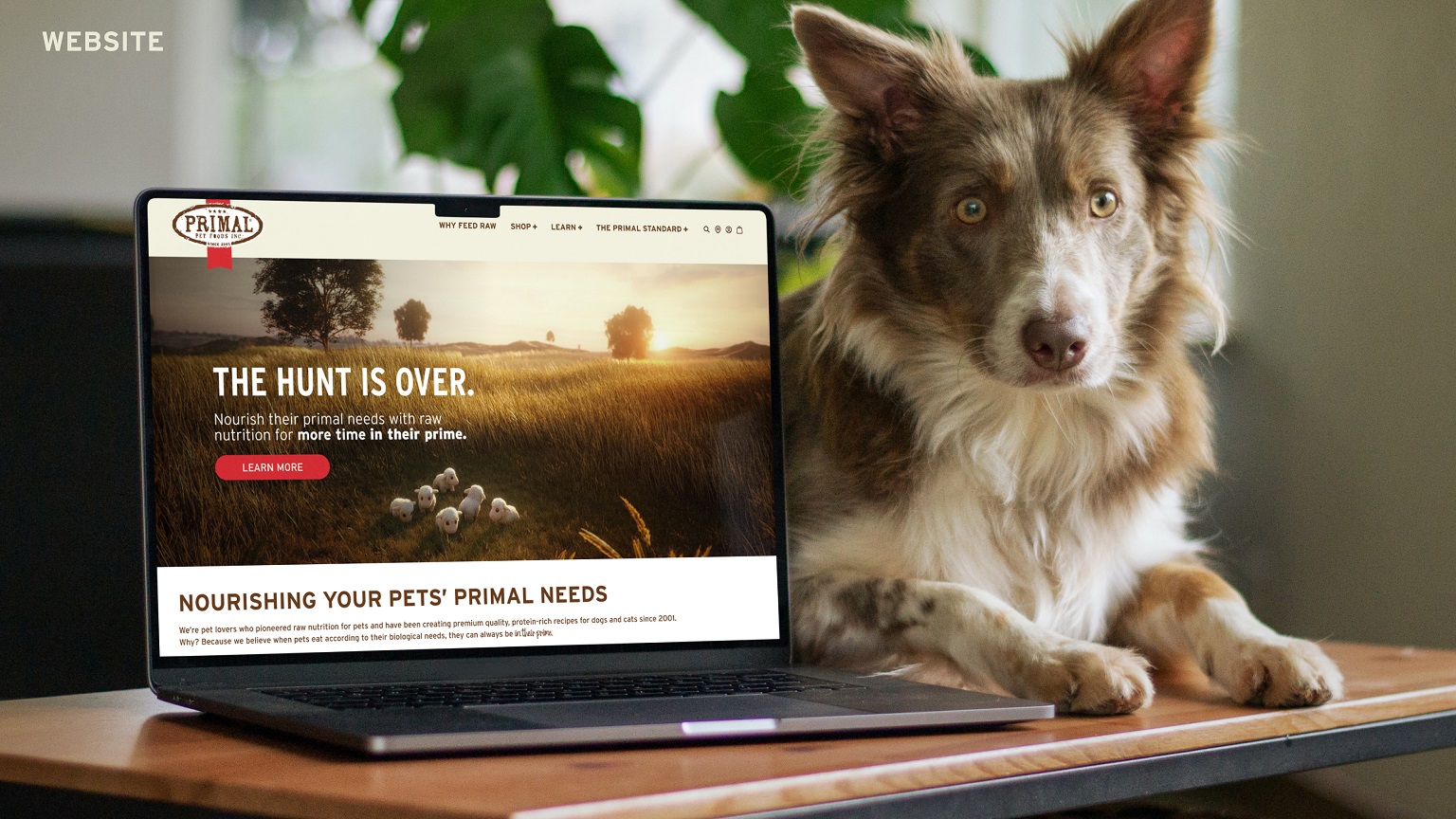
Our recent campaign for Primal Pet Foods is right at the top of the list. And yes, working with dogs is always a blast, but this one went well beyond that.
The concept took us into the world of dog dreams. Think a herd of stuffed lambs grazing peacefully, a dog pounces, and then it snaps back to reality where it’s just a dog toy on the living room floor. That kind of playful, surreal territory was a creative dream to work in. What made it really special though was how we pulled it off, blending live action with CG and AI to bring these metaphorical dog and cat dreams to life. It was genuinely fascinating to figure out as we went.
The other thing I’ll always remember about that project is the people. Everyone brought their own level of talent to it and you could feel that in the final product. When a team is locked in like that, the work shows it.
Seeing it perform well at the award shows has been a great bonus. But honestly the process was the reward on that one.


Q) What is your favourite piece of work you wish you had done?
Puppy Monkey Baby. Need I say more.
Q) Who (if anyone) has been the greatest influence in your career?
This is genuinely a hard question because I’ve been lucky enough to work with and for so many incredible people throughout my career. I’d be doing a disservice to try to narrow it to one.
But I will say that my perspective on this business really shifted when I started working with independent agencies. Getting to see how the sausage is made from the inside, watching people who are both talented creatives and savvy entrepreneurs run their shops, that was an education no classroom could give you.
People like Pat Laughlin, Banks Wilson, and Scott Brandon have had a real impact on how I think about this work. Seeing the business from all angles, the creative side, the client side, the growth side, through the eyes of people who have built something meaningful, changed what I thought was possible. It made me a better creative and a better leader.
I’m still learning from them.
Q) What would you change about the industry, if you could?
This industry is a contact sport. You’re on teams, you compete, you win, you lose. I genuinely love that about it. But the thing that bothers me is how much talent never gets a real shot.
There are so many creative people out there with something real to offer the world. And there are just as many problems out there that creativity could genuinely solve, not just sell something, but actually make an impact. The gap between those two things, the talent and the opportunity, is wider than it should be.
I wish it were easier for people who want to create to get connected with the kinds of challenges that are worthy of their ability. That’s actually part of what drove me to write my book. If I can help even a handful of people close that gap a little faster, that feels worthwhile.
The industry will always be competitive. I’m not asking for that to change. I just think we could do a better job of making room for the people who deserve to be in the room.
Q) Tell us something that people wouldn’t necessarily know about you?
I’m a pretty passionate DIYer. I’ve renovated two houses and for a stretch I was documenting a lot of it on YouTube. Like a lot of creatives, I love getting off the computer and making things with my hands. It scratches the same itch, just with different tools.
The funny thing is how much random knowledge you accumulate along the way. I’ve learned how to do things I never in a million years thought I’d need to know. Snaking a drain from the attic is not a skill they teach in art school, but here we are.
Q) Where would you ideally like to be in your career in the next five-years?
Still learning, still building. That’s the honest answer.
I want to continue growing an agency that punches above its weight creatively on a national stage. We’ve got real momentum right now and I’m excited to see where that goes.
One area I’m genuinely excited to keep exploring is the business of creativity. Understanding how creative thinking drives business outcomes, and how to build organizations around that, is something I find myself more and more drawn to. There’s a lot of territory there I haven’t fully mapped yet.
The advisory work has also opened my eyes to how much creatives can contribute outside of the traditional agency model. Helping build companies, not just campaigns, is something I want to do more of.
If I’m still learning, still growing, and still doing work that matters five years from now, I’ll consider it a win.
Austin Scott is Chief Creative Officer at Brandon

MarComm’ Star Parade: Meet Austin Scott added by newsroom on
View all posts by newsroom →
You must be logged in to post a comment Login