
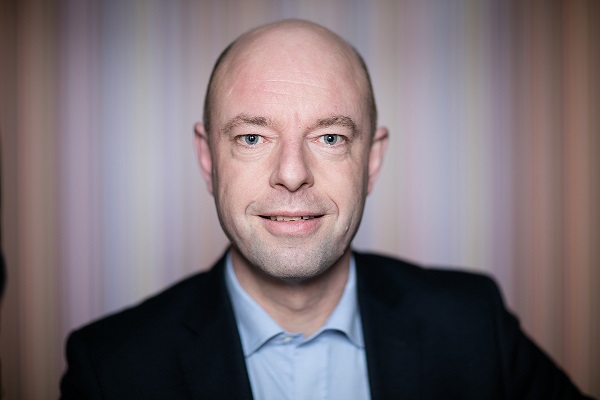
By Frédéric Vaulpré, Senior Vice-President Glance
Across the TV industry there are theories about the forces reshaping it, from cord-cutting and streaming fatigue to the gradual erosion of cinema-viewing. But spend a week in Los Angeles meeting the people who run these businesses, and a more nuanced picture emerges… It’s an industry undergoing profound, costly and at times unpredictable transformation where the established rules are being replaced, and the new ones are still taking shape.
The five themes that defined my recent conversations in Los Angeles, included:
1: Consolidation is already here
Every executive I spoke to brought up consolidation within the first five minutes. Hollywood is living through one of its most turbulent restructuring waves since the early 2000s and this time, it’s Big Tech calling the shots, not the telecoms industry.
After a decade of growth-at-all-costs streaming, the reality has set in with subscriber growth slowing and profitability demanded. The race is now about scale, content depth and survival.
The recent deal between Warner Bros. Discovery and Paramount is the most visible, but it won’t be the last. Global advertising revenues are projected to surpass $1 trillion in 2026 and the spoils will go to those with the leverage to claim them.
2: Netflix on the top spot of the SVoD players podium
People outside the industry haven’t fully grasped how dominant Netflix has become. Two-thirds of the original programmes in Nielsen’s top 10 lists came from Netflix. It accounts for over two thirds (66%) of the original programmes and more than half of the films in the top 10 over the past five years. It has 300 million subscribers and more profit than any other streaming service.
Meanwhile, Apple TV+ barely registers, it accounts for less than 1% of top 10 shows over five years. The gap between Netflix and the rest is not narrowing, it’s widening.
3: Broadcast networks are tougher than we thought
Linear TV was supposed to be long gone by now, but it persists. Yes, overall linear viewing has fallen from 63% to 44% market share since 2021, but the networks themselves are holding firm, largely thanks to live sports and live entertainment.
CBS just finished its eighteenth consecutive year as the top network. ABC’s primetime share grew 26% over five years. The shows carrying them? Tracker, Matlock and Dancing with the Stars. It’s not experimental prestige drama that’s popular, it’s the broad-audience crowd-pleasers that bring viewers back time and time again. Audiences haven’t abandoned linear TV, they’ve just become more selective about why they turn it on.
4: YouTube is no longer a platform, it’s television
This was the conversation that came up in every single meeting I had. YouTube has been the number one distribution path on U.S. television screens every month since April 2025. In December, it captured 12.7% of all TV-screen usage and that figure excludes YouTube TV and mobile viewing. It reaches 2.7 billion monthly users globally, and it pays creators more than Netflix and Paramount combined.
One executive said, “YouTube has to be a part of everyone’s video strategy.” Another said: “Don’t try to compete against them, work with them.” The message I took home is that YouTube has become the dominant force in U.S. television viewing.
5: Micro-dramas are a $7 billion signal worth paying attention to
The popularity of the format that surprised me most is micro-dramas. These are vertical formats watched on apps originally from China (where they’re called duanju). They typically have 60-to-90-second episodes, often 50 or more per series and built around billionaire romances, revenge plots or secret heirs. They sound absurd, but the numbers are not. The U.S. market generated $800-$900 million in 2024.
Deloitte projects global revenue rising from $3.8 billion in 2025 to $7.8 billion in 2026. Fox, Disney, Hallmark and Univision are already involved. The production costs are negligible, a full series costs $200,000, and the binge mechanics are addictive by design. Whether this is a threat to Hollywood or an opportunity depends entirely on how fast Hollywood moves.
The forces I’ve described are not on the horizon, they are already reshaping the competitive TV landscape. The companies that will define the next decade are already making their moves: consolidating, partnering with YouTube rather than fighting it and taking seriously formats that their competitors have not yet noticed.
The data tells a clear story and the entertainment industry has always rewarded those who read the signals early. The opportunity now is the same as it has always been to see clearly, move decisively and not mistake the noise for the signal.
Frédéric Vaulpré is Senior-Vice-President at Glance. For more information visit: glance-mediametrie.com/en
By Frédéric Vaulpré, Senior Vice-President Glance

From Consolidation to Micro-Dramas: What Hollywood Is Really Talking About added by newsroom on
View all posts by newsroom →
You must be logged in to post a comment Login