
The best flagships change how people feel about a brand and what they are willing to pay for it. Landor’s Aaron Shields explores five shifts that will expand their influence, and how to measure the value they create.
By Aaron Shields, Executive Director, Experience Strategy, Landor
A flagship should be the place where people understand most clearly why a brand deserves their attention, time and money. It can make a familiar product feel more valuable, introduce a brand to a new generation or give people a reason to spend an afternoon in its company.

That is a substantial commercial ambition. It calls for more than a bigger shop.
Kantar finds that up to 75% of brand building comes from experiential touchpoints. Flagships give brands exceptional scope to shape those experiences through products, people and participation. Their enduring job is to elevate emotion and deepen what the brand means to its audiences.
Once dismissed as boardroom exuberance, flagships are becoming serious instruments for building brands and acquiring customers. Their potential grows as brands get better at designing the experience and measuring its contribution. Five shifts will define what comes next.
1. Digital natives still want somewhere to go
PwC’s US research found that 61% of Gen Z preferred discovering new products in-store. Brands planning around young people’s screen time risk overlooking where they want to spend their time.
Discovery, desire and purchase can happen in different places. Someone might encounter a brand on TikTok, experience it in a flagship and buy through an app weeks later. The channel recording the sale does not necessarily deserve all the credit for creating it.
Gymshark’s Regent Street flagship gives its digitally built brand a physical home, bringing its fitness community together. It creates opportunities to experience the brand alongside people who share an interest.
Future flagships will make more of those encounters. For brands recruiting their next generation of customers, the opportunity is to create formative memories while preferences are still taking shape. A visit without a purchase can still be the beginning of a valuable relationship.
2. Flagships will become meeting points
Our work with Bose found that “meeting up with friends” was the single biggest mission for visiting a flagship. That should change the design brief.
People visit flagships periodically, often as part of a day together. If the visit is social, a store designed entirely around individual browsing and conversion is missing an important reason people came.
Future flagships will give those occasions more room, with places to pause and experiences people can enjoy together. Our New Balance flagships already bring people together around running and refuelling, connecting the store to a shared activity.
Putting a café in a shop is no guarantee of relevance. The social experience needs to express something credible about the brand and give people a reason to choose it over the alternatives.
Space without merchandise can still be commercially productive. The question is what people do there, how it makes them feel and whether it strengthens their relationship with the brand.
3. Personalisation will make brands worth more
People place greater value on products they help design. Research into the “I designed it myself” effect links that willingness to pay to feelings of accomplishment, beyond simply getting a product that better suits their preferences.
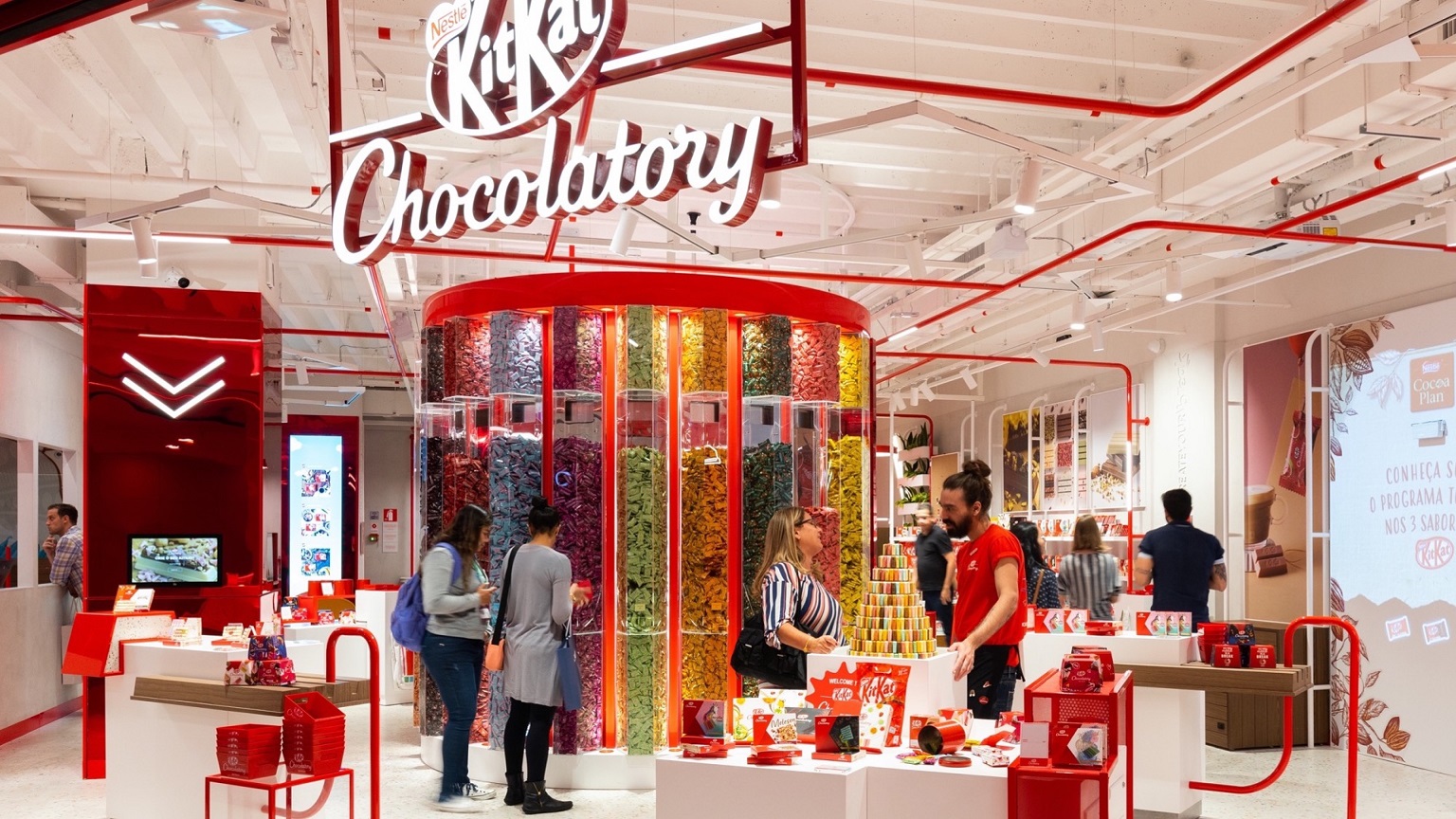
For KitKat Chocolatory, we took personalisation from printing faces on bars to customising flavours. A familiar chocolate bar became a break made especially for you.
These experiences give people a stronger emotional stake in what they buy. They also create an opportunity to reconsider what the wider brand is worth. A product usually encountered in a supermarket multipack can become something people spend time creating and pay a premium to own.
The evidence is strongest for the personalised product itself. The wider ambition for flagships is to carry that increased sense of value across the brand, helping support full-price purchases wherever people shop. That is a benefit to measure, rather than assume.

4. People will lead, technology will support
Rodney Fitch, who founded FITCH, now part of Landor, always said retail was about giving people the chance to touch something or talk to someone.
That remains a useful test for technology. If someone can have the same experience at home or on the bus, what makes it worth their time in a flagship?
Technology designed to capture attention should encourage interaction or create something worth photographing and sharing. Keeping someone occupied with a screen is a low ambition for a space built to deepen brand meaning.
Our work with Kiehl’s connects digital skin analysis with advice from staff, using technology to start a more personal conversation. The information becomes more useful because someone can explain it, respond to questions and help the customer decide what matters.
Future flagships will judge technology partly by how much better it makes those interactions. Investment in digital capability needs matching care in recruiting, training and supporting the people who make the experience memorable.
5. Bigger brand worlds will reach further
Rising costs will encourage brands to concentrate investment in fewer regional destinations, with enough scale to express a richer brand world.
Location decisions will weigh cultural influence alongside local spending power. The busiest street is not automatically the most influential address.
Groundbreaking work with adidas’s six-city flagship initiative placed distinctive brand experiences in internationally influential locations. Elsewhere, our work with Starbucks Reserve Roasteries and Netflix House show how brands can use physical spaces to create something much bigger than a conventional shop.
Visitors carry these experiences into conversations, photographs and content. Tourists take their impressions home. A flagship’s influence can extend well beyond its immediate catchment.
Future flagships will plan for that reach from the outset, connecting the experience inside the building to the demand it can create elsewhere.
Measure the whole contribution
Broader ambition requires disciplined measurement. We look at flagship value through three connected lenses.
- Brand: equity, associations with specific attributes, and the memories people take away. Has the experience strengthened what the brand means?
- Customer: NPS and how well the visit fulfilled the customer’s mission. Did people achieve what they came for, whether that was exploring a product or meeting friends?
- Commercial: average transaction value, basket size and composition, dwell time, store sales and the sales halo across other channels.
These measures need to be read together. Longer dwell time could signal engagement or frustration. Strong sales today could coexist with a forgettable experience. Improved brand perceptions need to translate into customer behaviour over time.
Tracking changes against a baseline, and comparable markets where possible, helps establish what the flagship contributes. That gives brands a balanced view of value and a clearer basis for deciding where to invest next.
The opportunity is to make flagships more ambitious and more accountable: places that deepen brand meaning, give people a reason to visit and build demand wherever the next purchase happens.
Aaron Shields is Executive Director Experience Strategy at Landor
Source: Landor

Flagships build what brands are worth added by newsroom on
View all posts by newsroom →
You must be logged in to post a comment Login