
Esporte Clube Bahia, one of Brazil’s most iconic football clubs, has partnered with the United Nations Population Fund (UNFPA) and independent agency Propeg to launch “Third Half,” a campaign confronting the rise in violence against women on football match days.
For women at Bahia’s Arena Fonte Nova, the final whistle did not mean it was time to leave.
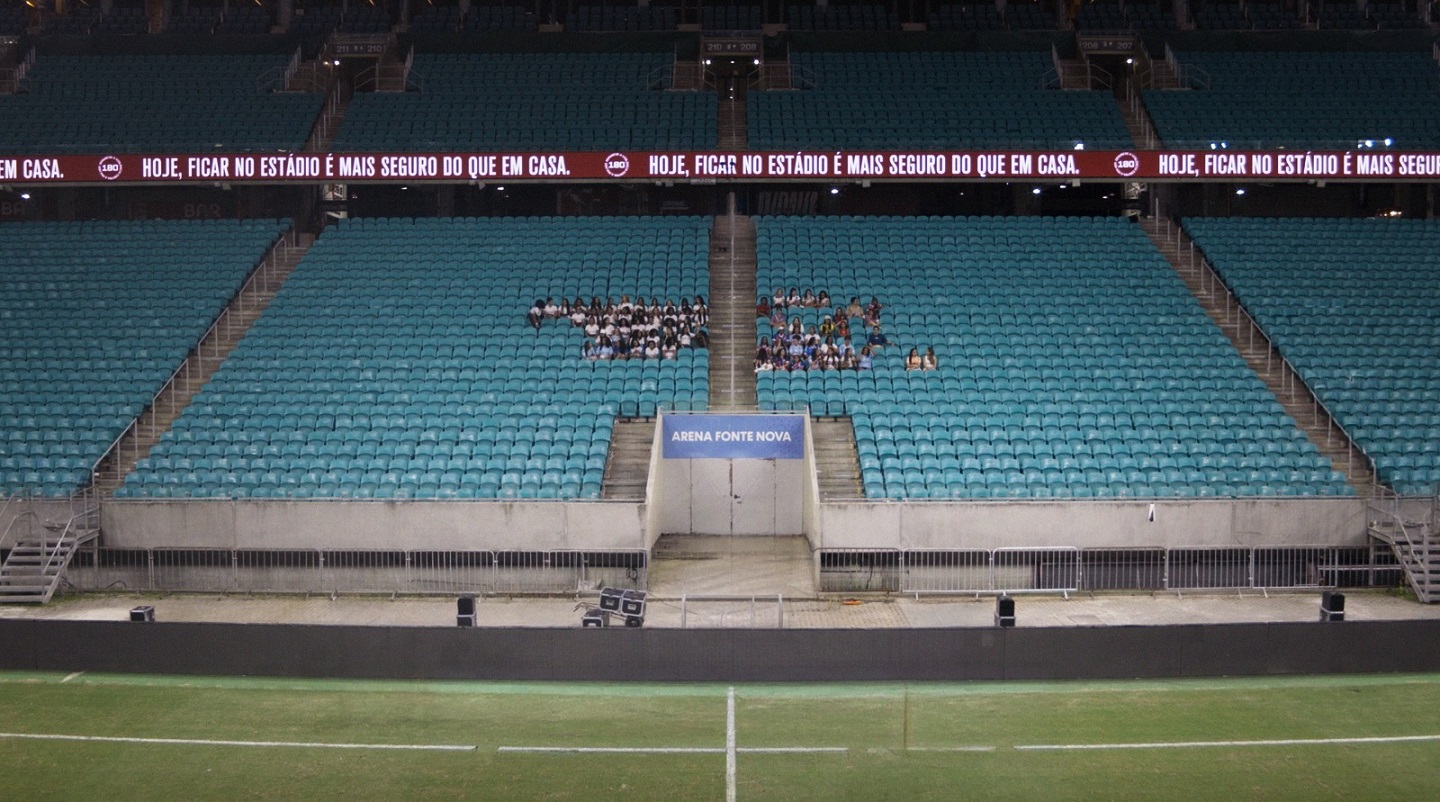
After the match, as the players left the pitch and most fans headed home, women stayed behind in the stadium’s East Stand.
Then the stadium screen delivered a message:
“Today, staying at the stadium is safer than being at home.”
The intervention was part of “Third Half,” an initiative by Esporte Clube Bahia, UNFPA and Propeg designed to confront a disturbing reality in Brazil: on football match days, reports of violence against women increase — including cases of domestic violence.
According to the second edition of the “Football and Violence Against Women” study, published by the Brazilian Public Security Forum in 2026, reports of threats against women increase by 27.4% on match days, while reports of domestic-violence-related bodily injury rise by 28.8%.
Among women aged 15 to 29, reports of threats and bodily injury increase by 44% on match days.
The research does not suggest that football itself causes violence. Rather, it indicates that match days can intensify and expose violent dynamics that already exist within households.
TURNING THE STADIUM INTO A MESSAGE
The idea behind “Third Half” was to take that data out of a report and turn it into an image that would be impossible to ignore.
The women who remained in the stadium included influencers, Bahia supporters, club employees and other invited guests. As the stadium emptied, they remained in the stands — reversing the expected post-match ritual of leaving the stadium and returning home.
The message above them made the reason clear:
“Today, staying at the stadium is safer than being at home.”
The initiative also highlights Brazil’s 180 hotline, the national service for women experiencing violence. The free service receives reports, provides information and directs women to support services across the country.
“The data from the Brazilian Public Security Forum shows that this issue goes far beyond the stands and reaches inside the home. With ‘Third Half,’ we wanted to transform that data into an image that would be impossible to ignore — and bring the conversation into a predominantly male environment, speaking directly to men in a space where they feel represented and engaged,” says Sabrina Mesquita, Creative Director at Propeg.
“Esporte Clube Bahia believes the power of football goes far beyond what happens on the pitch. As an institution, we have a responsibility to use the club’s visibility to provoke reflection and mobilize society around urgent issues. By keeping women in the stands after the match, we transformed a familiar football ritual into a symbol of awareness and a call to action against domestic violence. We want this image to draw attention to a reality that worsens on match days and reinforce the message that no woman should have to face it alone. If football has the power to bring millions of people together, it can also be a tool for promoting respect, protection and social change,” says Raul Aguirre, CEO of Bahia SAF.
“UNFPA works to prevent gender-based violence before it happens, and that necessarily means working with men and boys. We need to transform social norms that normalize violence and promote models of masculinity based on respect, care and equality. Partnerships like this show that this agenda can — and should — occupy different spaces across society,” explains Florbela Fernandes, UNFPA Representative in Brazil.
The initiative responds directly to one of the conclusions of the Brazilian Public Security Forum’s study: the need for football clubs, public authorities, federations and fan communities to take part in ongoing efforts to combat violence against women.
FROM THE STANDS TO SOCIETY AT LARGE
“Third Half” is an integrated awareness campaign spanning film, OOH and digital activations.
Rather than treating football and violence against women as separate conversations, the initiative uses one of Brazil’s most powerful cultural territories to put the issue in front of an audience that may not normally engage with it.
The campaign also reinforces the importance of reporting violence and encourages women and society as a whole to learn about and use Brazil’s 180 hotline.
The case film captures the intervention at Arena Fonte Nova:
With “Third Half,” Bahia, UNFPA and Propeg turn the moments after the 90 minutes into a reminder that, for some women, the most dangerous part of match day may begin when the football ends.
Source: Propeg

IN BRAZIL, WOMEN STAYED AT THE STADIUM BECAUSE HOME WAS MORE DANGEROUS added by newsroom on
View all posts by newsroom →
You must be logged in to post a comment Login