Escapism isn’t equal: women’s unpaid labour and mental loads dominate their abilities to escape.
As International Women’s Day approaches we often look at the workplace for signs of gender equality and progress, but what about our ‘free’ time?
In its 2025 global study, The Truth About Escapism, McCANN’s global intelligence unit, Truth Central, explored all things escapism. From what we consider to be an escape to what we need to escape from. A review of this data shows a deep gender divide in how and why, people escape, and in the case of women, whether they are even able to escape everyday pressures.
It’s clear from the data that women face significantly more obstacles to accessing meaningful escapism compared with men. So, what drives women to escape, and how they choose to do it?
According to McCANN, women’s escapism diverges in important ways from men’s experiences.
Escapism itself is unequal
On average, women complete more unpaid labour (3 hours 37 minutes per day in the UK alone – 54 minutes more than men), and this has big escapism impacts. Women’s leisure time is not only shorter, it’s more fragmented, and as a result, they gravitate toward “micro‑escapes” – flexible, interruptible activities such as reading, skincare rituals, scrolling, thrifting, and crafting.
Men, by contrast, are more likely to pursue activities requiring long, uninterrupted stretches of time, such as gaming, sports, or outdoor adventure.
The mental load
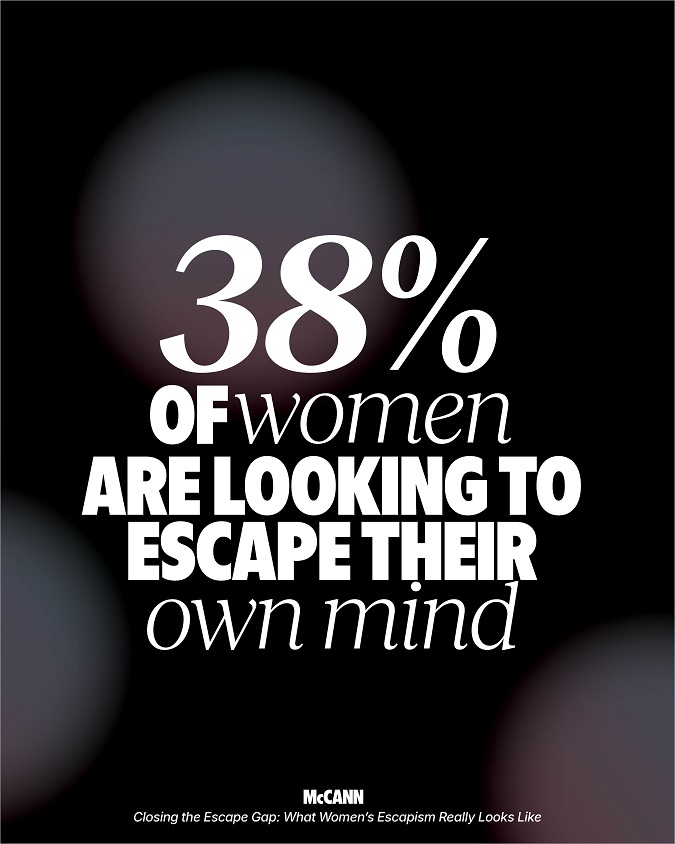
The analysis finds that although external pressures affect everyone, women’s primary driver for escape is internal, with 38% of women saying they most want to escape “my own mind.” This compares with 26% of men and reflects a rising mental load driven by domestic responsibilities, financial pressures, and cultural expectations that continue to disproportionately fall on women.
In fact, there was a clear divide in the categories of pressure that men and women were more likely to want to escape from. Women overindexed on domestic and personal pressures, while men overindexed on pressures to do with work and the wider world.
The Gender norms of escapism
Cultural coding restricts what women feel escapism “should” look like so that even when women participate in the same activities as men, they are less likely to claim those identities.
Despite women making up around 40–45% of the gaming audience, many do not describe themselves as “gamers” due to long‑held cultural stereotypes.
The “Planning Paradox”
You might be thinking that with all that unpaid labour what women really need is a nice relaxing holiday.
While men overwhelmingly view holidays as the ultimate form of escapism, saying it’s the one thing they would save above all others the same isn’t true for women. Instead, TV and film taking that top spot as a more realistic and less taxing moment of rest.
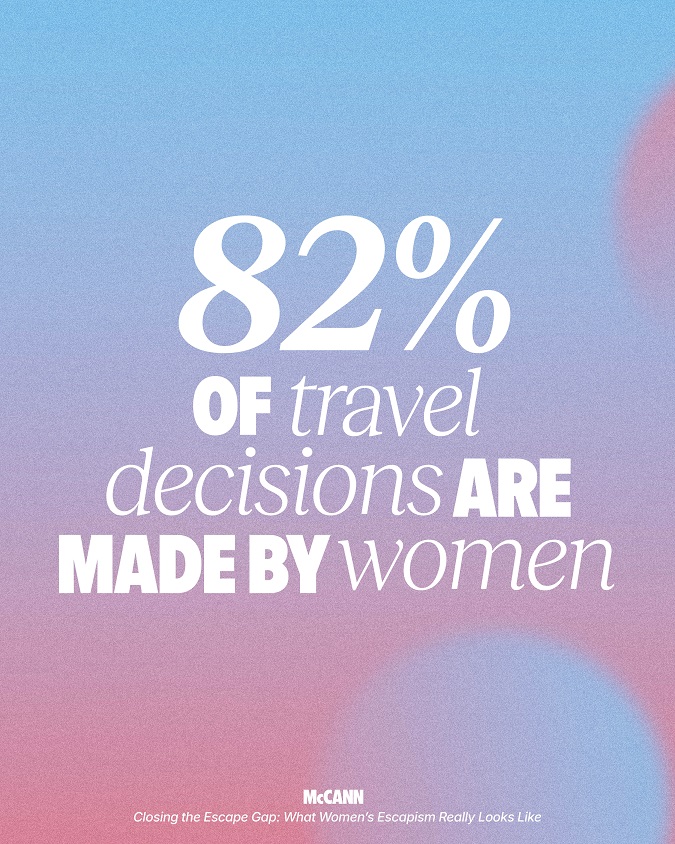
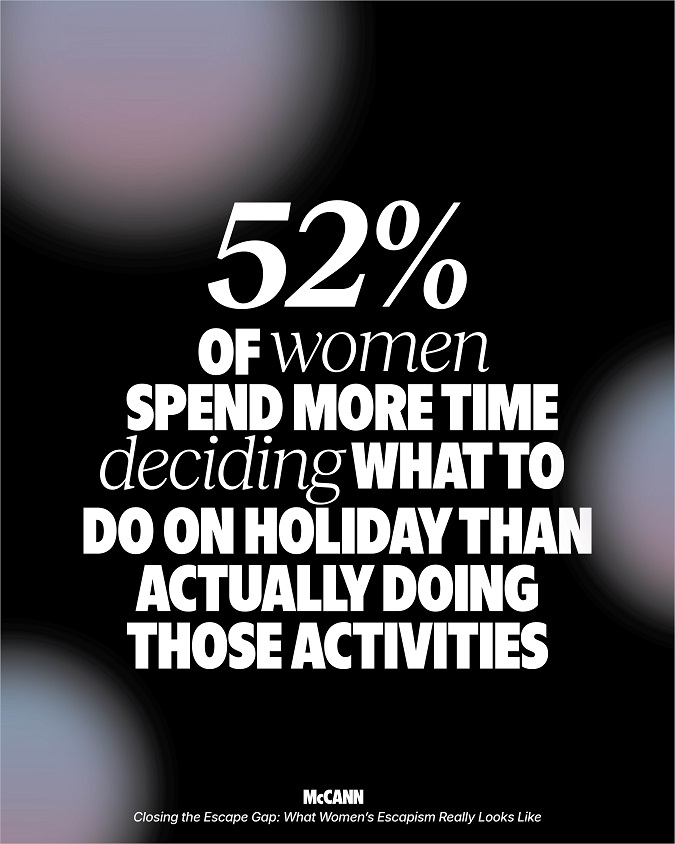
That’s because holiday escapes are far from equal and the “Planning Paradox” means more women shoulder the organisation of holidays. 82% of women take on the role of holiday planner which means those idyllic beach vibes are less a genuine escape, and more a project women have to manage.
Sarah Warewinter, Managing Partner, Strategy at McCANN, and author of McCANN’s whitepaper on gendered escapisms, said: “Escapism is something we all need. It should be joyful. It should feel freeing. But for so many women, it comes with caveats, compromises, and extra labour.
Our analysis shows that women are micro-dosing on escapism, choosing shorter, bite‑sized forms of escape not because they prefer them but because their lives are choosing for them. If brands truly want to champion women, they need to dismantle the practical, cultural and emotional barriers that make escape feel out of reach. Equality should be applied to everything. And that means the freedom to rest, to recover, and to escape.”
So, what can brands do to close the gender escapism gap?
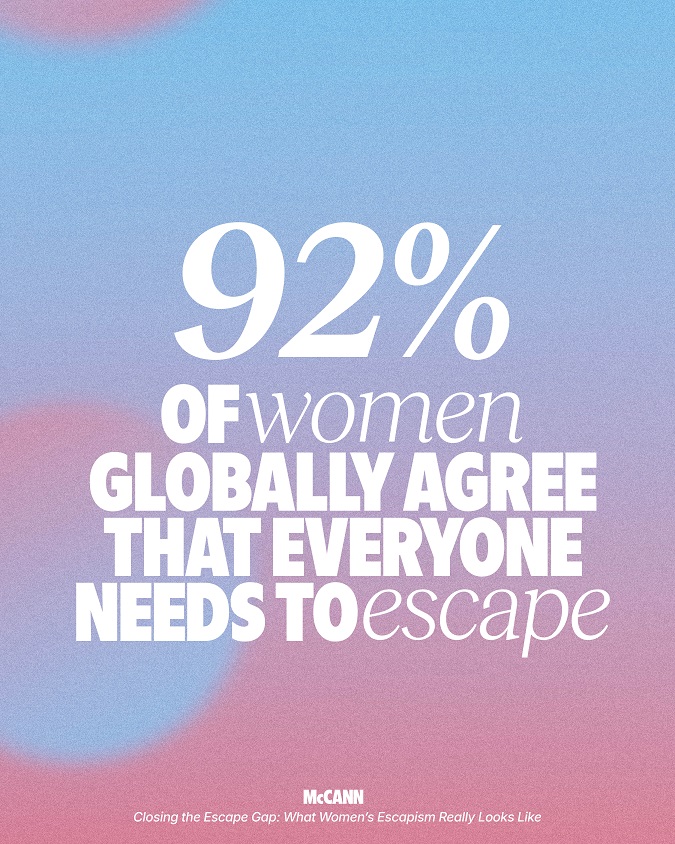
With 92% of women globally agreeing that everyone needs to escape occasionally, brands across entertainment, travel, beauty, gaming, sport, and wellness are in a prime position to speak to women’s experiences and support their need for escapism.
Quick wins could be:
- Design for the mental load: Reduce friction in planning, decision‑making, and participation.
- Challenge cultural coding: Make all forms of escapism feel like they “belong” to everyone.
- Stop stereotyping motivations: Women’s reasons for wanting to escape are often internal – shaped by invisible pressures, not just busy schedules, and brands that can speak to this will resonate with women.
- Create new possibilities: Support women in accessing forms of escapism that require time, space, and freedom – not just the ones that fit into the cracks of their day.
This data paints a powerful picture of how unequal escapism really is – and why closing the escapism gap must become a priority for brands everywhere.
Read the full report here.
Source: McCann

The Gender Escapism Gap added by newsroom on
View all posts by newsroom →
You must be logged in to post a comment Login