
Assumptions about what consumers want challenged by new global retail research
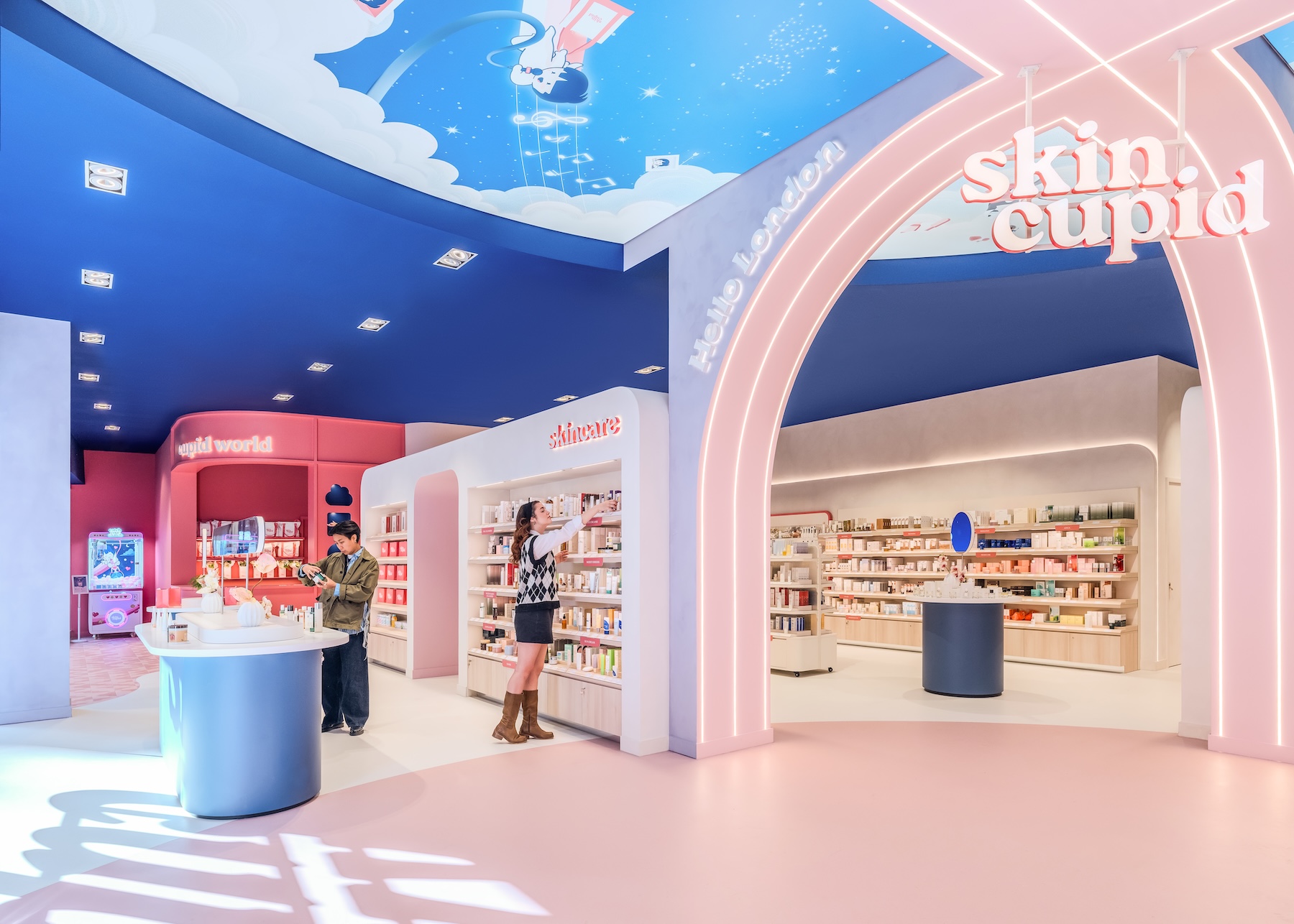
Consumers want physical experiences but retailers are falling short, new research shows. Spaces That Feel: Consumer Realities, a global survey of over 5000 consumers in 10 cities, found that only 24% of vivid spatial memories come from branded environments, despite the industry push for brand-led spaces, experiences and activations.
Commissioned by retail design agency YourStudio, the study revealed that spaces are felt in the body before they are understood in the mind. Energy, vibes, and the indescribable is the most important quality consumers register, with 54% saying they valued this the most when entering a space. This suggests brands need to define how they create an ownable atmosphere, particularly as it takes less than 30 seconds for most people (54%) to decide how a space makes them feel.
Spaces That Feel combines qualitative and quantitative data to test the relationship between design and feeling: the Emotion Gap. The findings aim to challenge industry assumptions about how people experience space and what the future of retail design should look like.
Rachael Stott, Strategy Director, YourStudio says, “For years, retail has operated on assumptions that prioritise novelty and hyper-visual stimulation in-store. Our data suggests these assumptions are creating an Emotion Gap – a growing distance between what people want to actually feel and what retail is currently delivering.”
She continues, “Experiences may get people through the door, but how spaces make them feel is what gets them to stay. With this research, we want to demonstrate how emotions are the difference between a space people return to and one they forget. Brands spend millions on visual impact but they are failing to register in the one place that matters—human feeling.”

Spaces That Feel: Consumer Realities
Key findings
A Generational Shift in Senses
In a world saturated by screens, the “visual-first” rule of retail doesn’t always ring true:
- The generation raised on visual content—those aged 18-24—actually underindex on “what you see” as the most important quality of a space by 7 points compared to the global average.
- 18-24 year olds are more influenced by the people in the space (37%) and the physical presence of elements that cannot be digitized: scent, temperature, and atmosphere.
- What you touch (22%) ranked last as the least important sense to shape a spatial experience.
The Community Conundrum
Despite the rise of branded communities, people aren’t seeking belonging in retail spaces.
- At 9%, branded spaces had the lowest score for where people want to build human connections in the future
- Only 13% of people across the 10 markets identified belonging as an emotion they want to have in-store
The Paradox of “Calm + Pleasure”
Across multiple questions – from transformative experiences to imagined retail spaces to future desires – calm consistently ranks as a top emotional quality across markets, challenging the notion that spaces have to be stimulating and loud to evoke feelings.
- 36% state that feeling calm was associated with a transformative spatial memory.
- However, in-store, Pleasure (32%) actually overtakes Calm (28%) as the desired feeling, indicating that consumers aren’t looking for static environments; they want “dynamic systems” that can hold multiple emotional registers, encouraging “zoning out” while feeling absorbed and effortless.
The “Unbranded” Memory Crisis
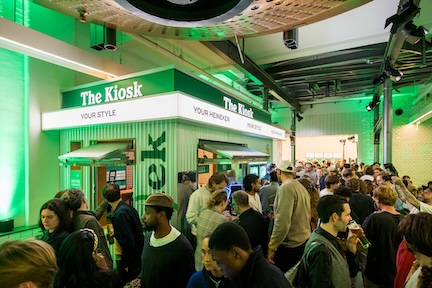
The research challenges the industry’s obsession with Instagrammable moments. The data reveals that brand experiences are shockingly forgettable and the most vivid spatial memories are personal. This is a commercial failure, as memory is where brand loyalty and advocacy actually compound.
- Only 24% of people’s most vivid spatial memories come from brand experiences, even though 65% prefer to experience a brand in a physical space (compared to 15% online).
- 84% seek out familiar spaces for positive emotional experiences, 10 points higher than seeing out new experiences.
Regional takeaways
Australia
“Calming, not overstimulating”, “Surprising, not overwhelming”
– quotes from Melbourne respondents.
Survey respondents in Australia are looking for calm with a little texture but nothing too forced. They largely reject in-store automation (almost 20%), similar to London and Paris respondents.
Asia
Asia (Beijing, Delhi, Seoul) is the most emotionally responsive and commercially open region, with respondents exhibiting higher trust in brands and more appetite for surprise and tech.
45% of Seoul shoppers want to experience pleasure in-store — the highest single-emotion score of any city studied. Seoul overindexes hugely on “vibe” as what defines a space (68%) — well above every other city.
Less than 5% of Delhi respondents resist automation, suggesting it is welcomed, not rejected.
Delhi and Beijing share two notable traits: 90% of shoppers in both cities say physical experience drives purchase – well above the 78% global average. Beijing and Delhi are the only two cities where “surprise” is wanted, not a rejected emotion.

US
Respondents in the US (New York and Austin) behave like those in Europe (London and Paris). Control and trust are required before pleasure or surprise can be effective
- “Pressure to purchase” was named directly by US respondents as a source of discomfort in store.
Europe
Shoppers in Europe (London and Paris) want to be in control, very like US respondents. They are slow to trust automation and want experiences that feel earned, not engineered.
- Almost 20 reject in-store automation outright, almost done the global average (12%).
- London has one of the lowest likelihoods of brand experience influencing purchase (66%), and only 23% desire logistics technology in a retail space — 7 points below the global average
Research partner Obsurvant conducted Interviews with 5258 consumers across generations and genders in Austin, New York, Mexico City, São Paulo, Beijing, Seoul, Delhi, London, Paris and Melbourne.
Over the next 12 months, further insights will be released, including sector and regional deep dives. YourStudio will test the findings, with the aim of creating a framework to measure brand and retail experiences.
A PDF of the report will be available to download from weareyourstudio.com in September 2026.
Source: Yourstudio

Retailers falling short, new research shows added by newsroom on
View all posts by newsroom →
You must be logged in to post a comment Login