
Crossfire Hurricane, the Rolling Stones’ premium rum launching globally this month with Kite Drinks in collaboration with Universal Music Group and global rum authority Ian Burrell, arrives with a complete brand reconstruction delivered by Fred & Farid New York. The agency was responsible for the brand positioning, the visual identity, the print poster campaign, the motion campaign, and the digital ecosystem. Every element was rebuilt from zero around a single conviction: the most powerful asset the brand owned was a story that had never been fully told.

That story is more than 50 years old. Until now, it had stayed exactly where it began.
In the early 1970s, the Rolling Stones needed a place to be. Jamaica was the place that took them in. They settled in Steer Town, on the north coast, in the parish of Saint Ann. The same parish that produced Bob Marley. The same parish that produced Marcus Garvey. A community with no particular reason to welcome a British rock band, and that welcomed them anyway. The Stones recorded there. They returned. They stayed connected to the island for the rest of their lives. The encounter was unplanned, unmediated, and exactly right.

Out of that period came a creative bond with Jamaica that has never broken. Keith Richards has kept a home on the island for fifty years. Mick Jagger has spoken of the country across five decades of interviews. The relationship is documented, continuous, and deeply personal. It is also the reason Crossfire Hurricane exists.
The brand name itself carries a second story. Crossfire Hurricane is the opening line of Jumpin’ Jack Flash, a phrase Keith Richards wrote about his own birth under WWII bombing raids in Dartford, England, 1943. A word born in British rubble. A rum born in Jamaican exile. Two halves of the same life, joined in a single bottle. The April 2026 launch is the first time this history has been told at this scale, as a brand. The work Fred & Farid New York delivered is the act of telling it.
What happened in Jamaica in 1972 is precisely the kind of cultural encounter that no longer happens by default. A generation is now reaching adulthood having never discovered anything outside of a recommendation engine. Spotify does not send you to Jamaica. TikTok does not introduce you to Marcus Garvey. In Filterworld (2024), the writer Kyle Chayka named the condition: serendipity has been engineered out of cultural life.
Crossfire Hurricane is the commercial activation of the opposite proposition. A rum born from real exile, a real island, and a creative encounter that produced something neither side could have produced alone. The brand does not sell nostalgia. It carries an argument: constraint creates, friction produces, and the most significant cultural moments happen outside the feed. For a new generation of drinkers, that is the proposition.
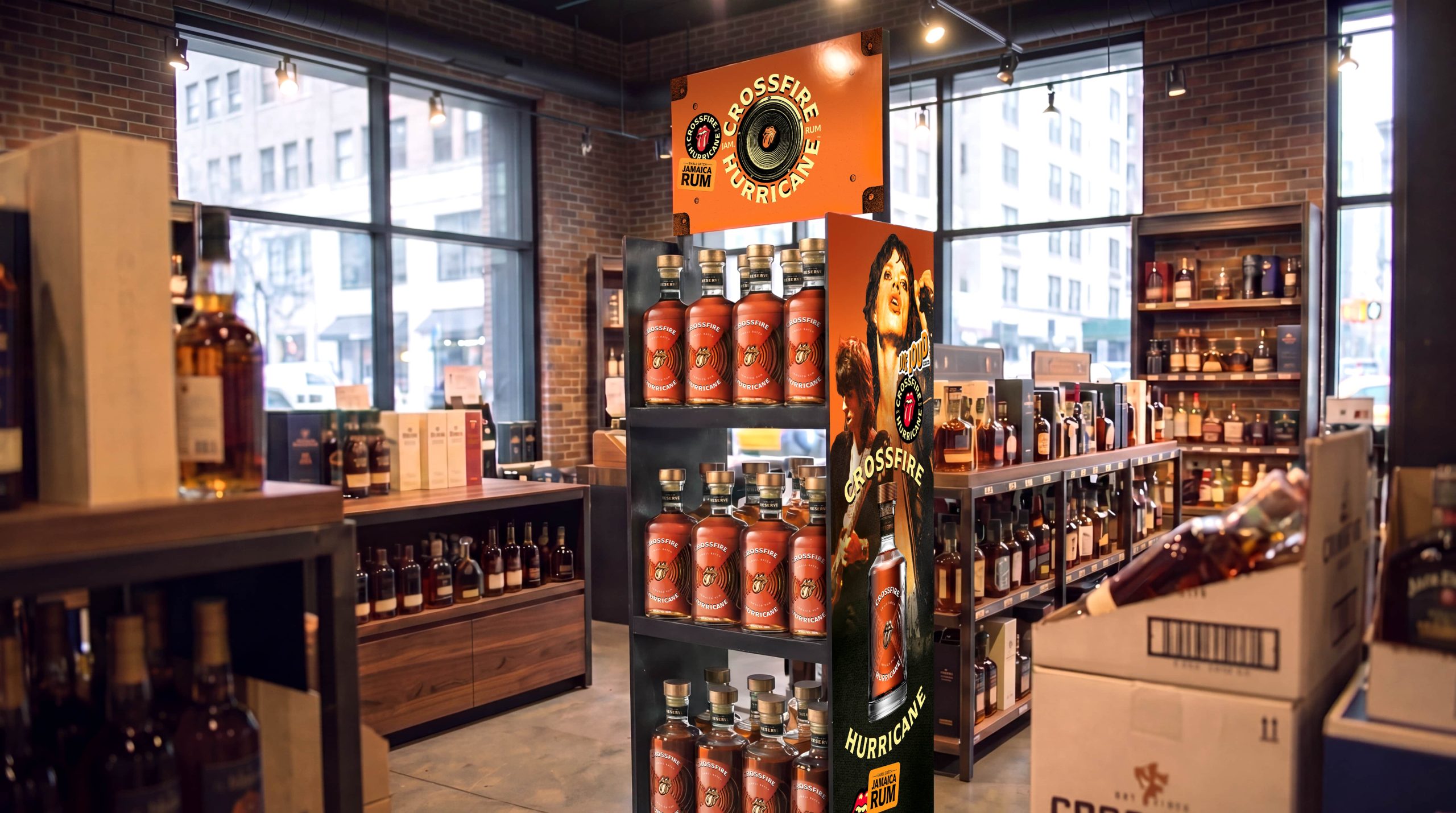
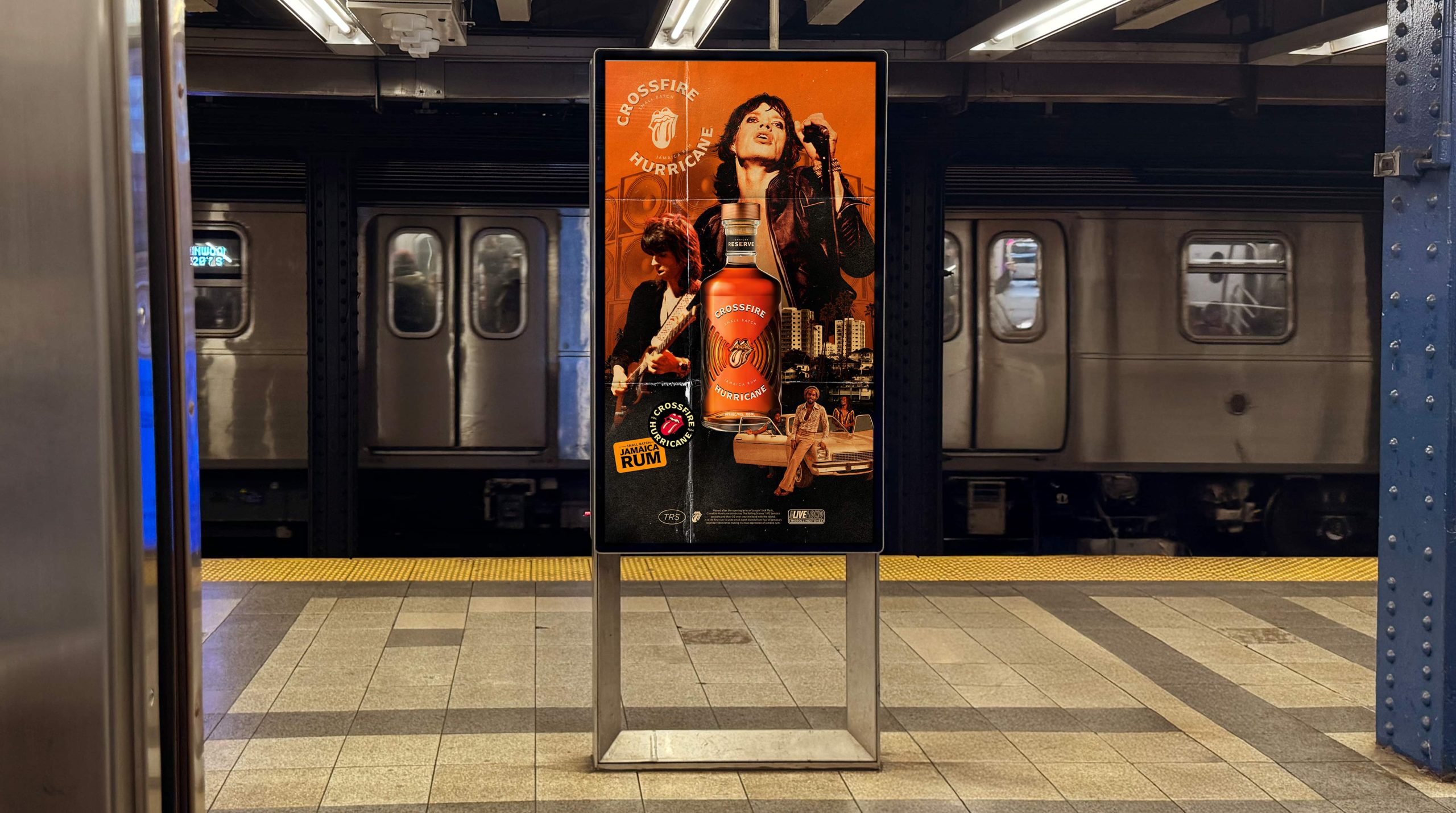
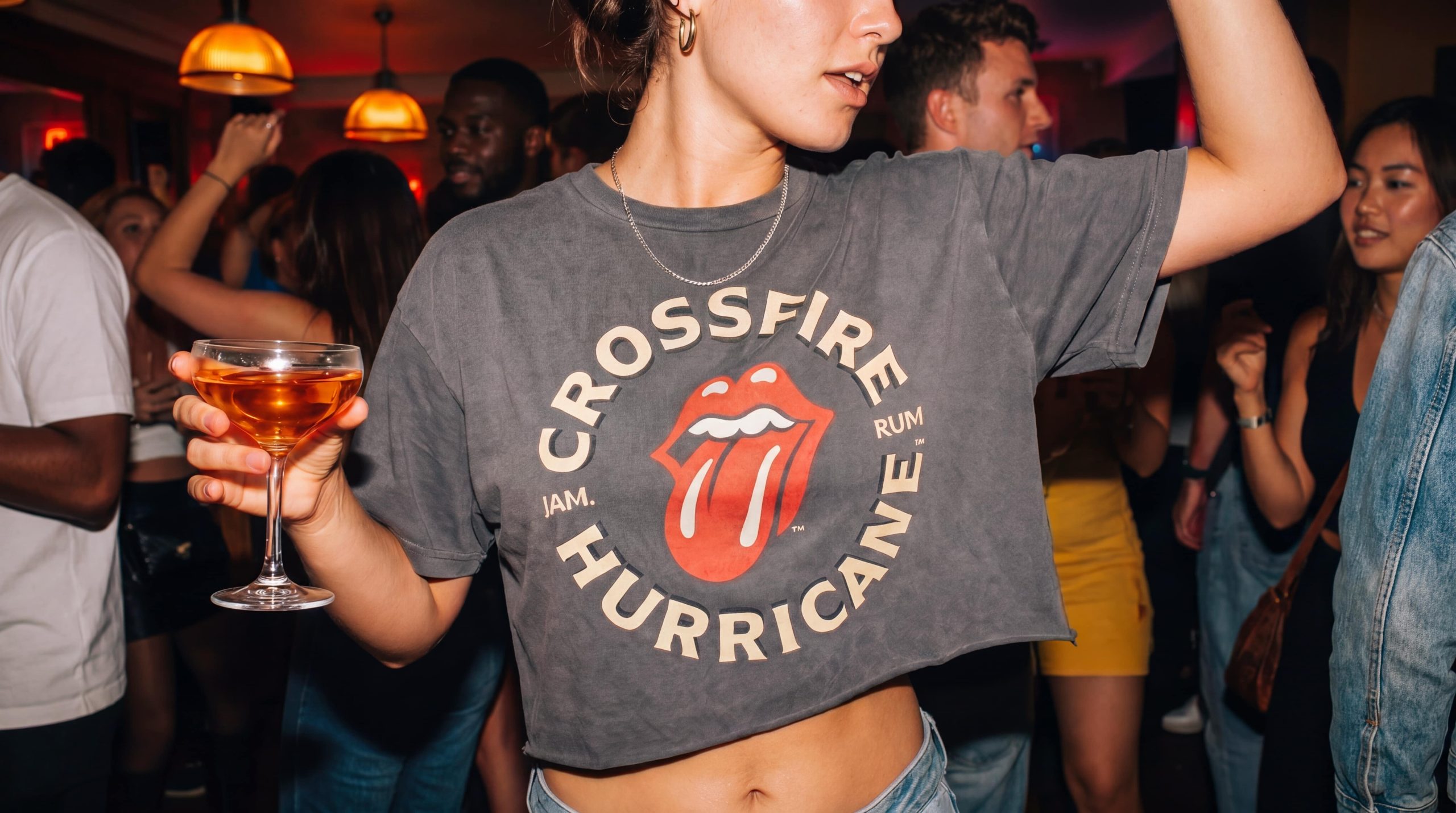
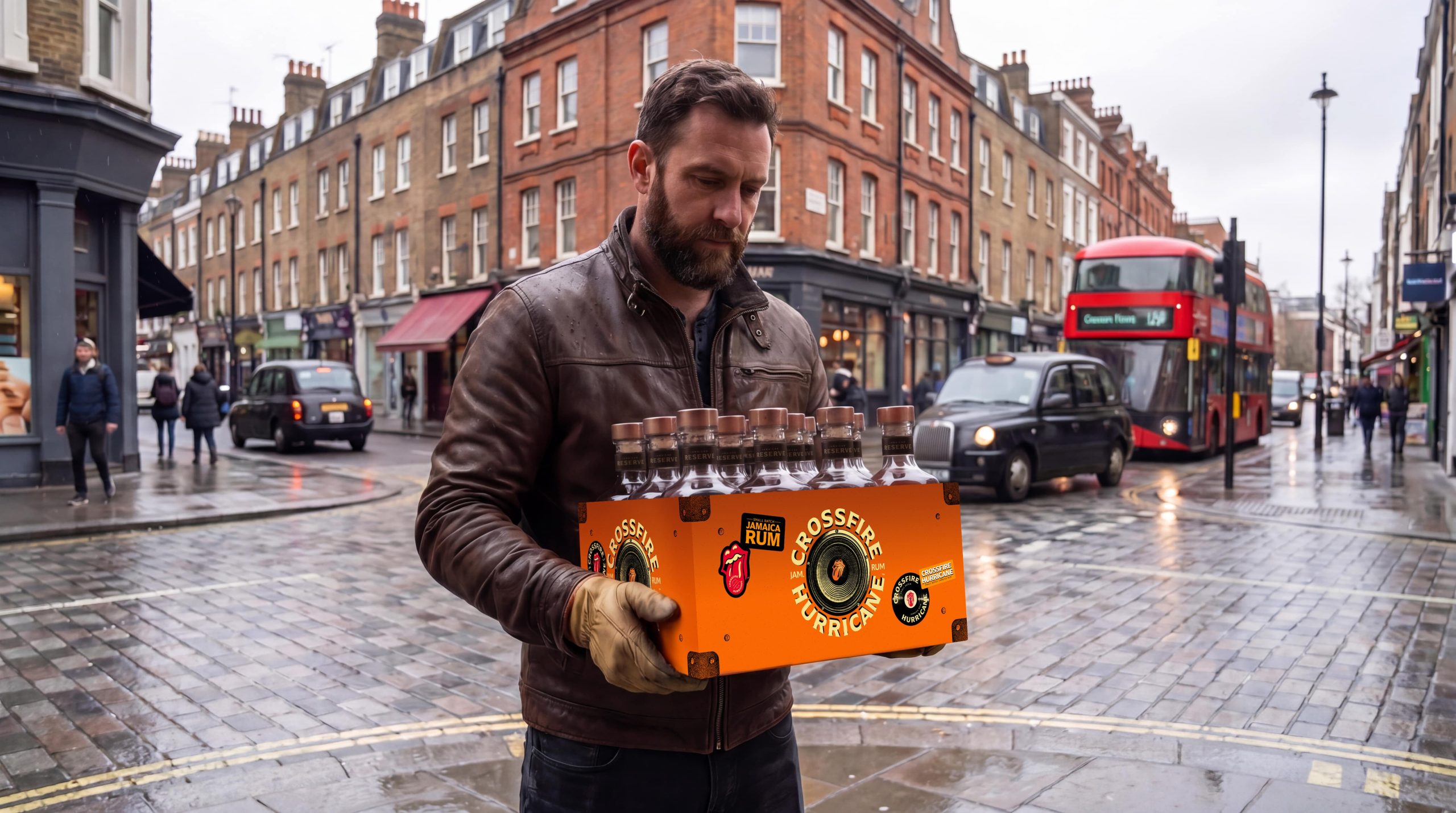
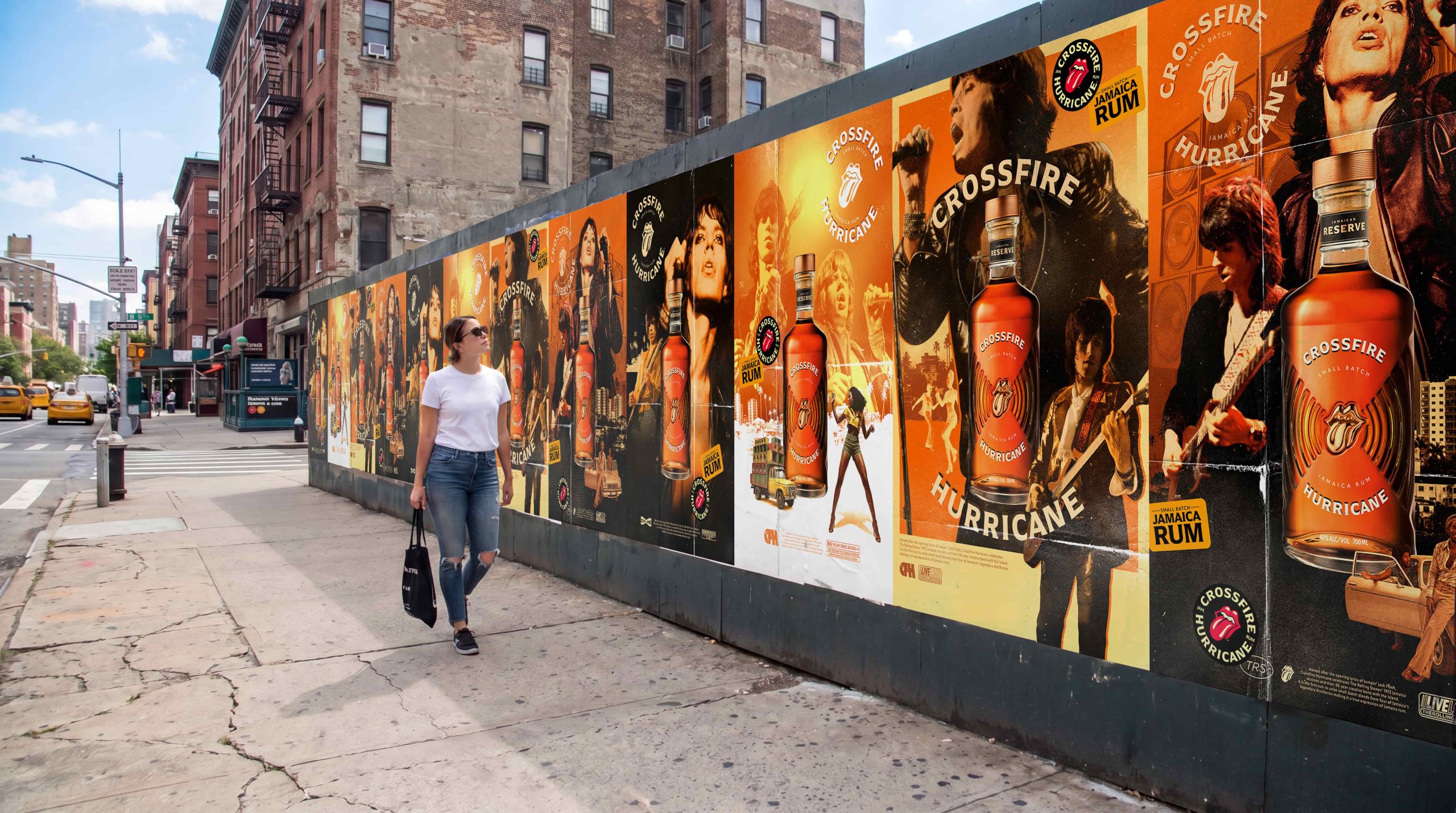
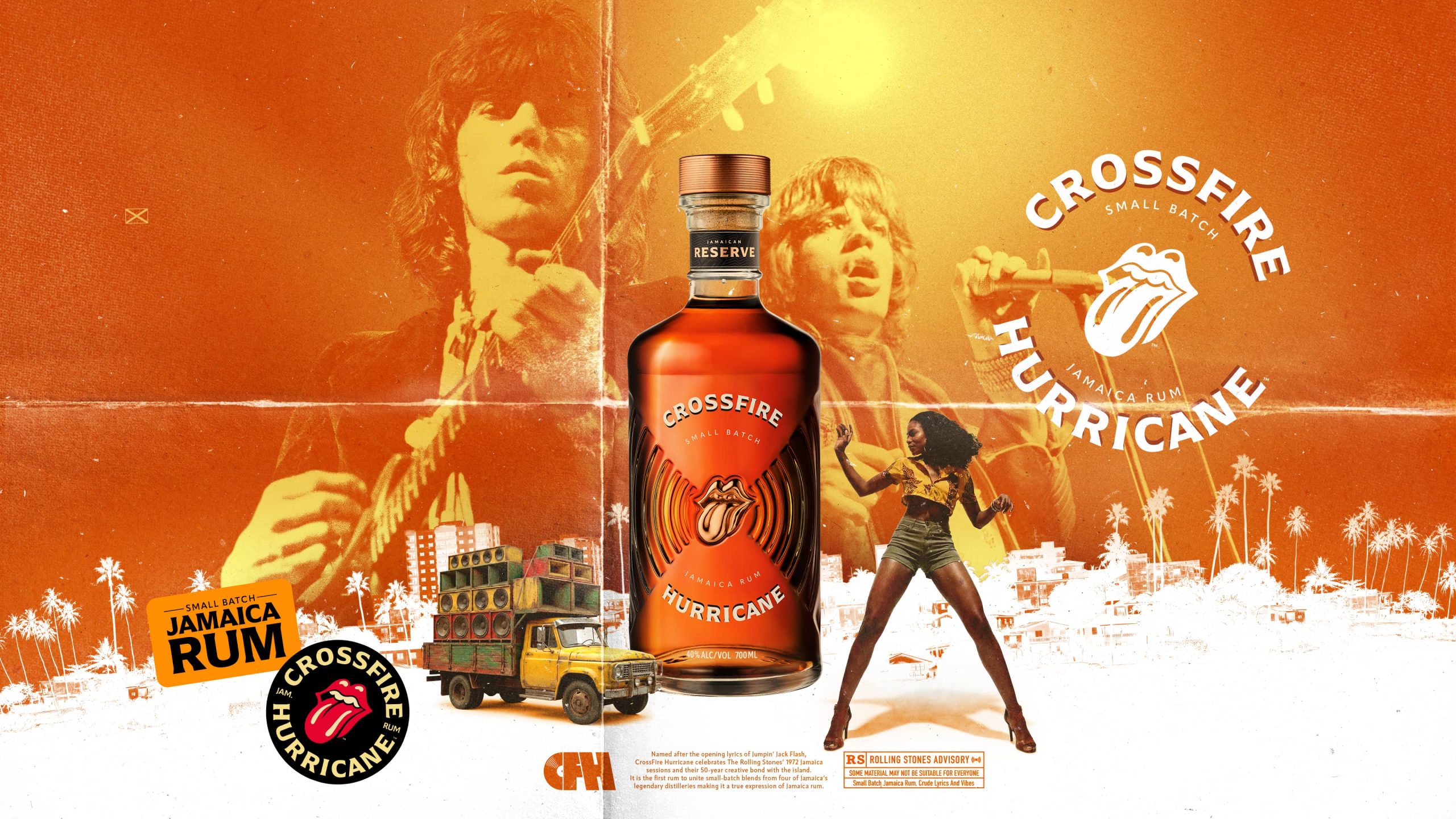
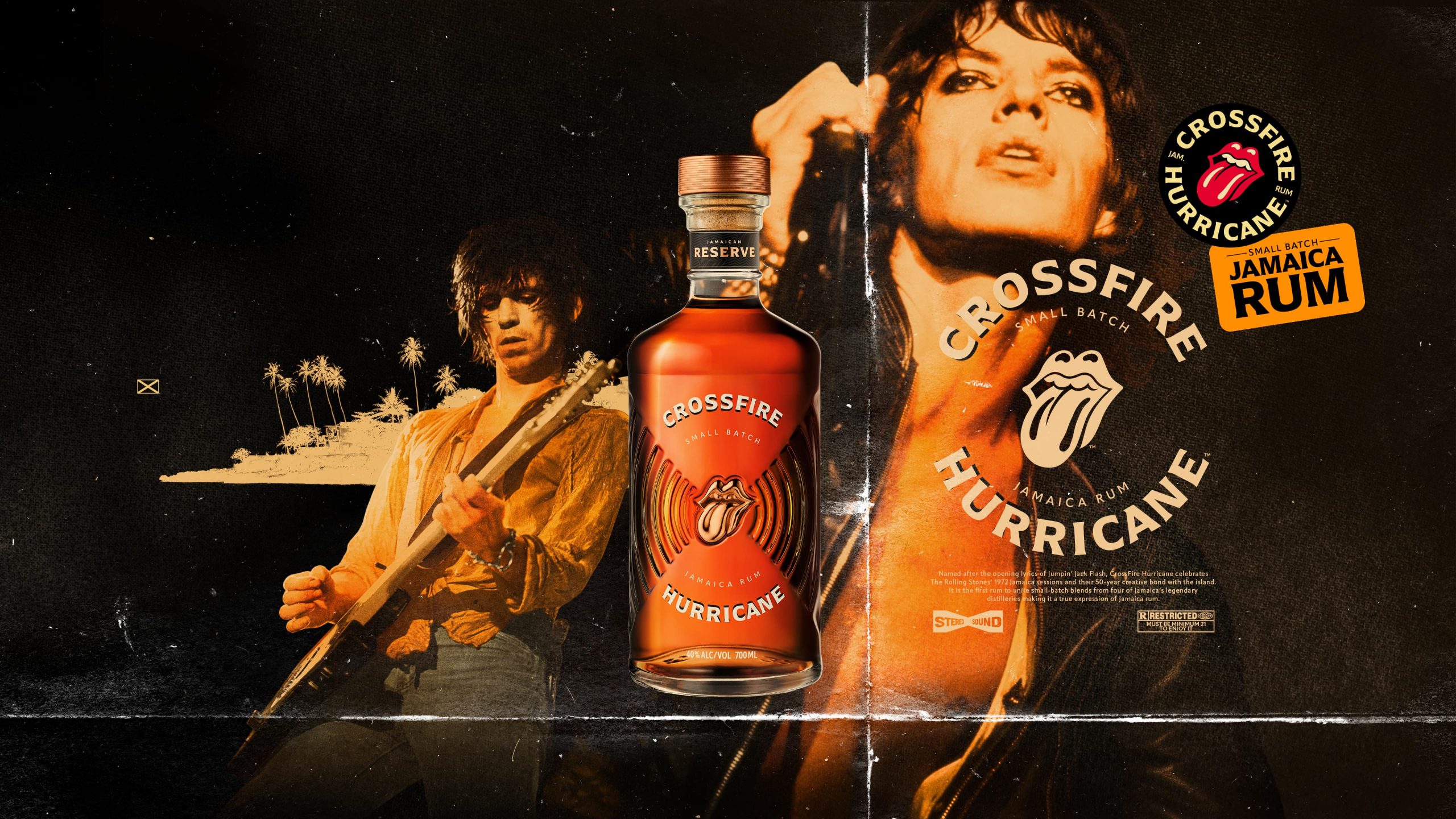
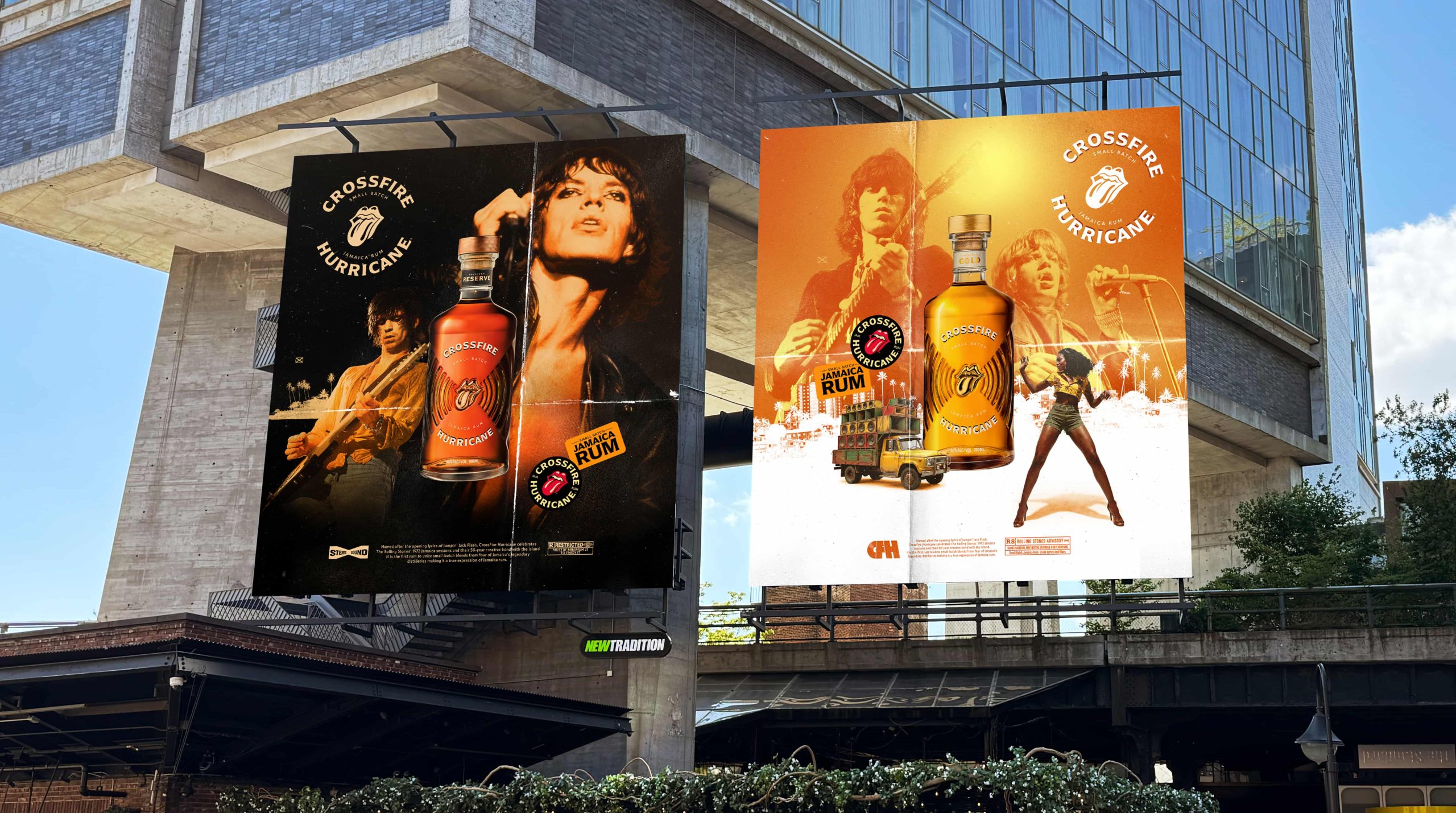
Every decision in the Fred & Farid New York creative system is built to make the epic encounter visible. The print poster campaign places two authentic 1970s archives in a single frame. Rolling Stones concert photography. Jamaican poster art. The two visual languages have rarely been combined commercially. Held together here, they do not blend. They collide. The friction is the point.
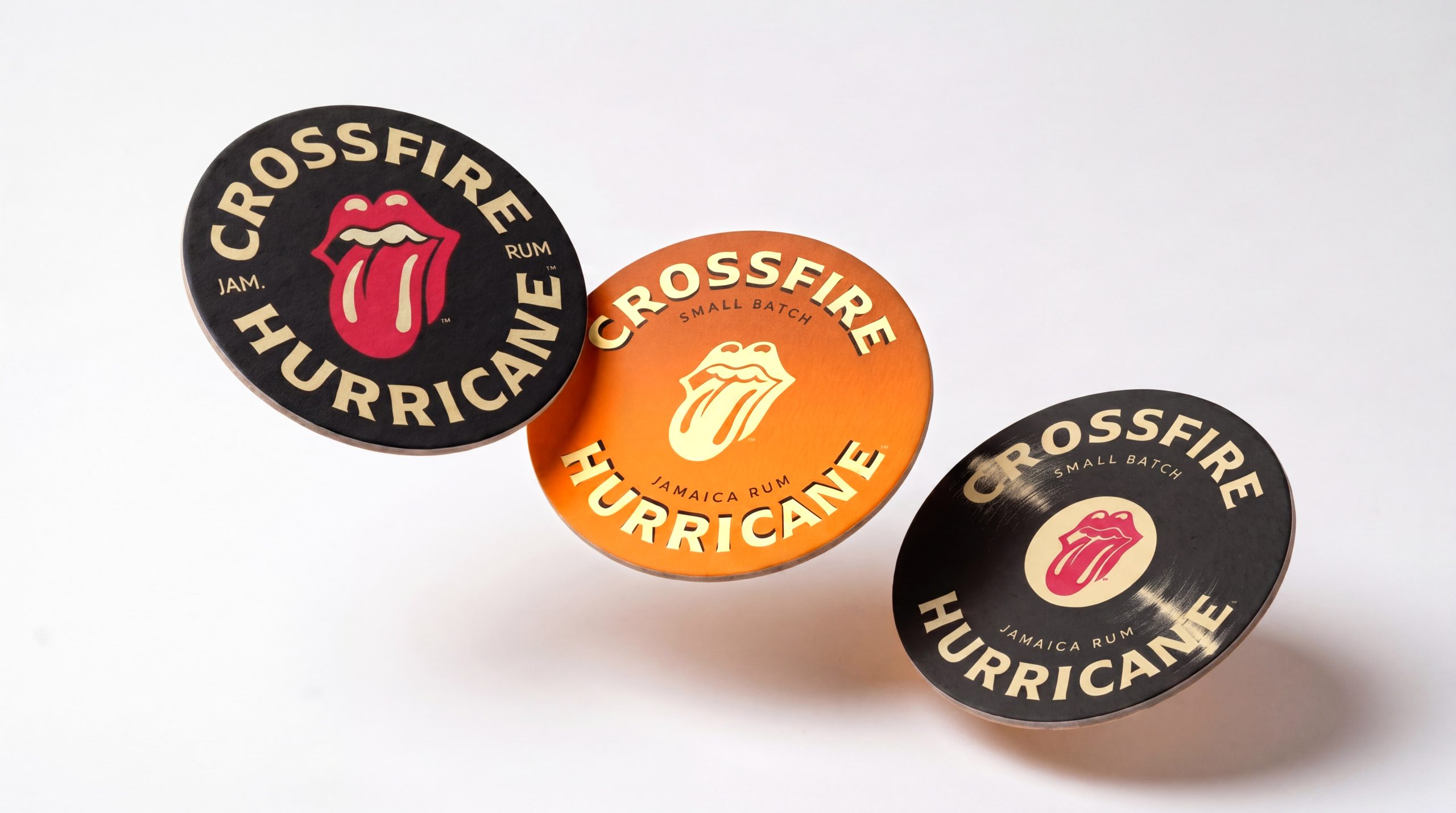
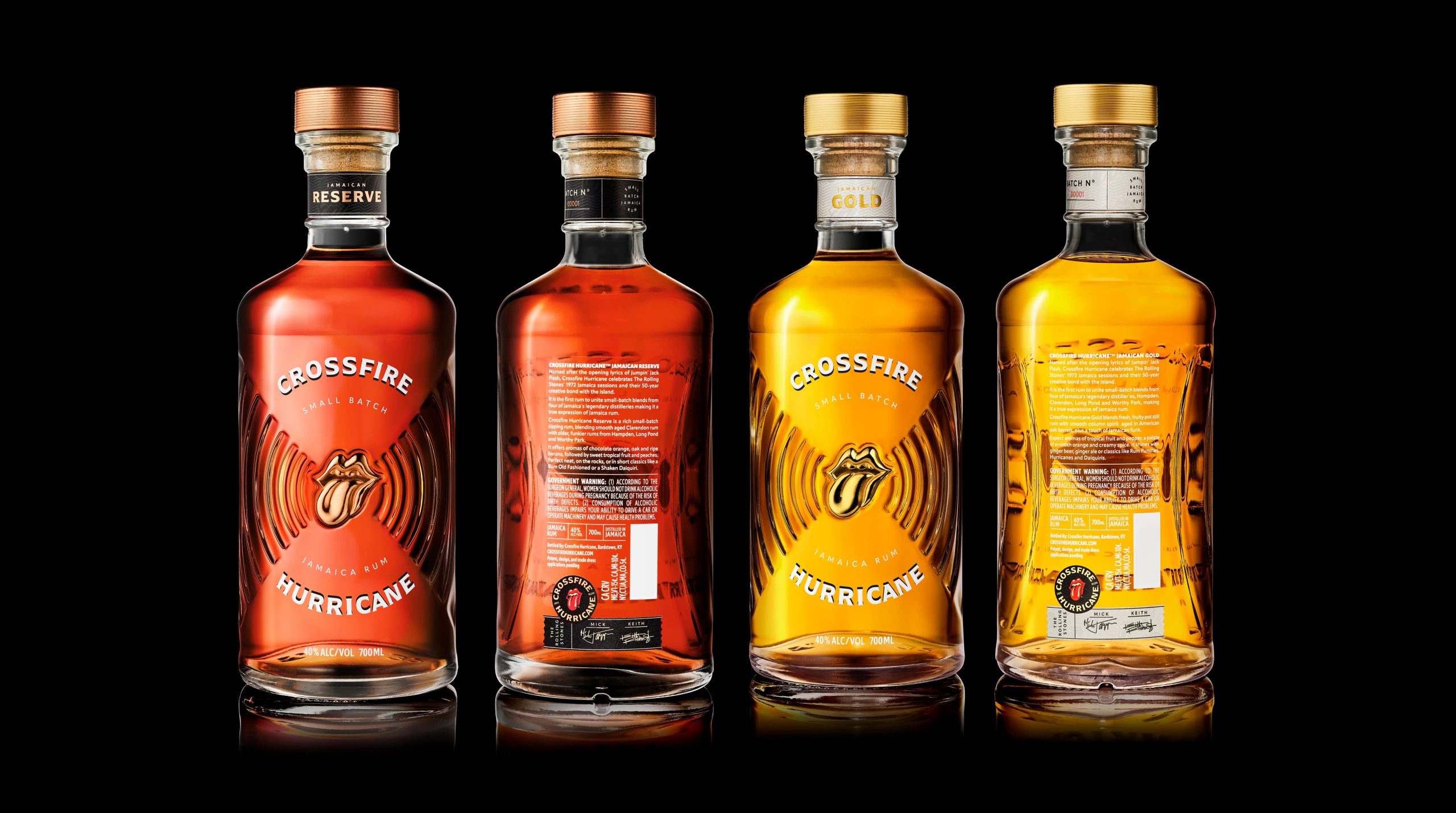
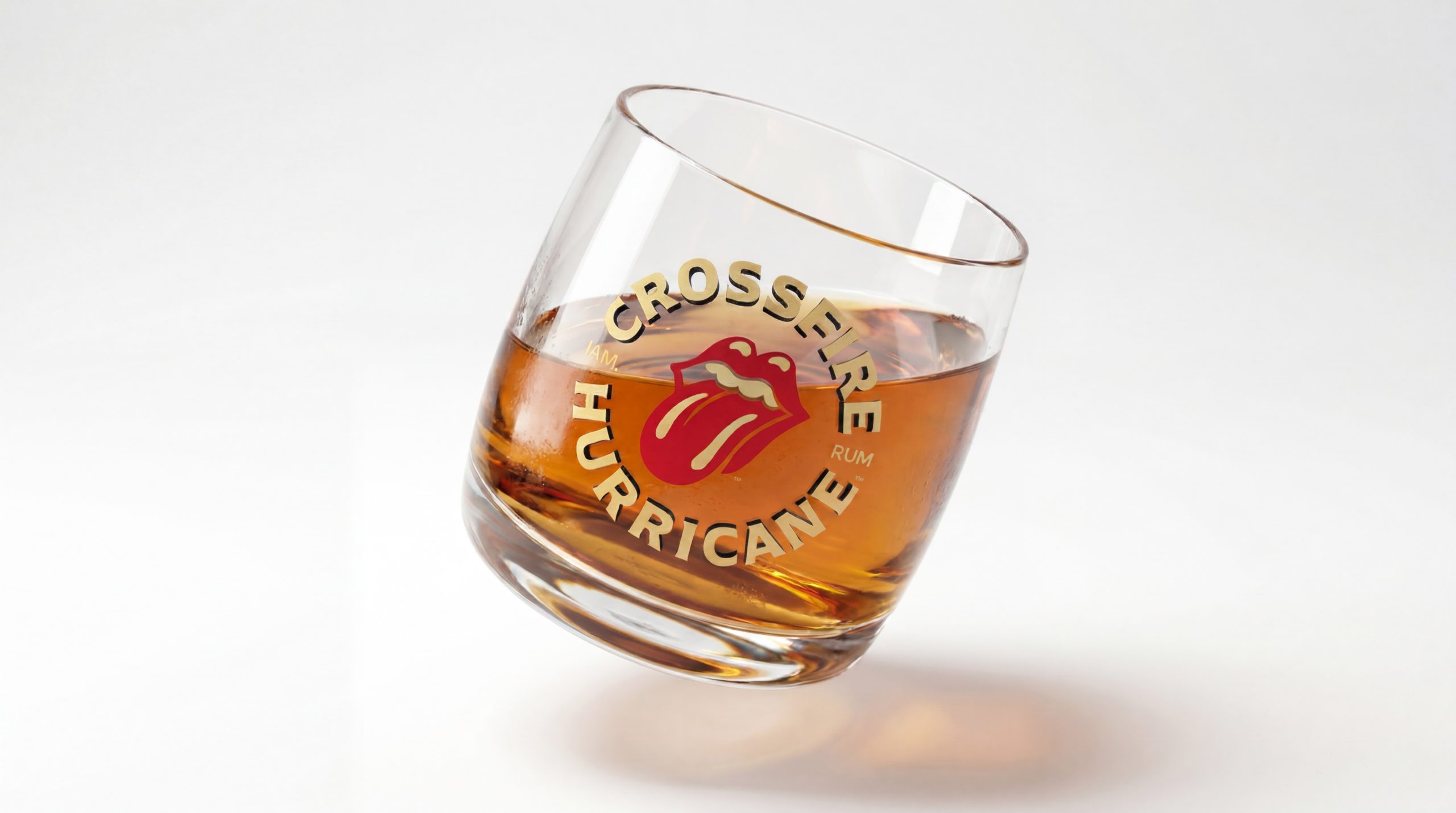
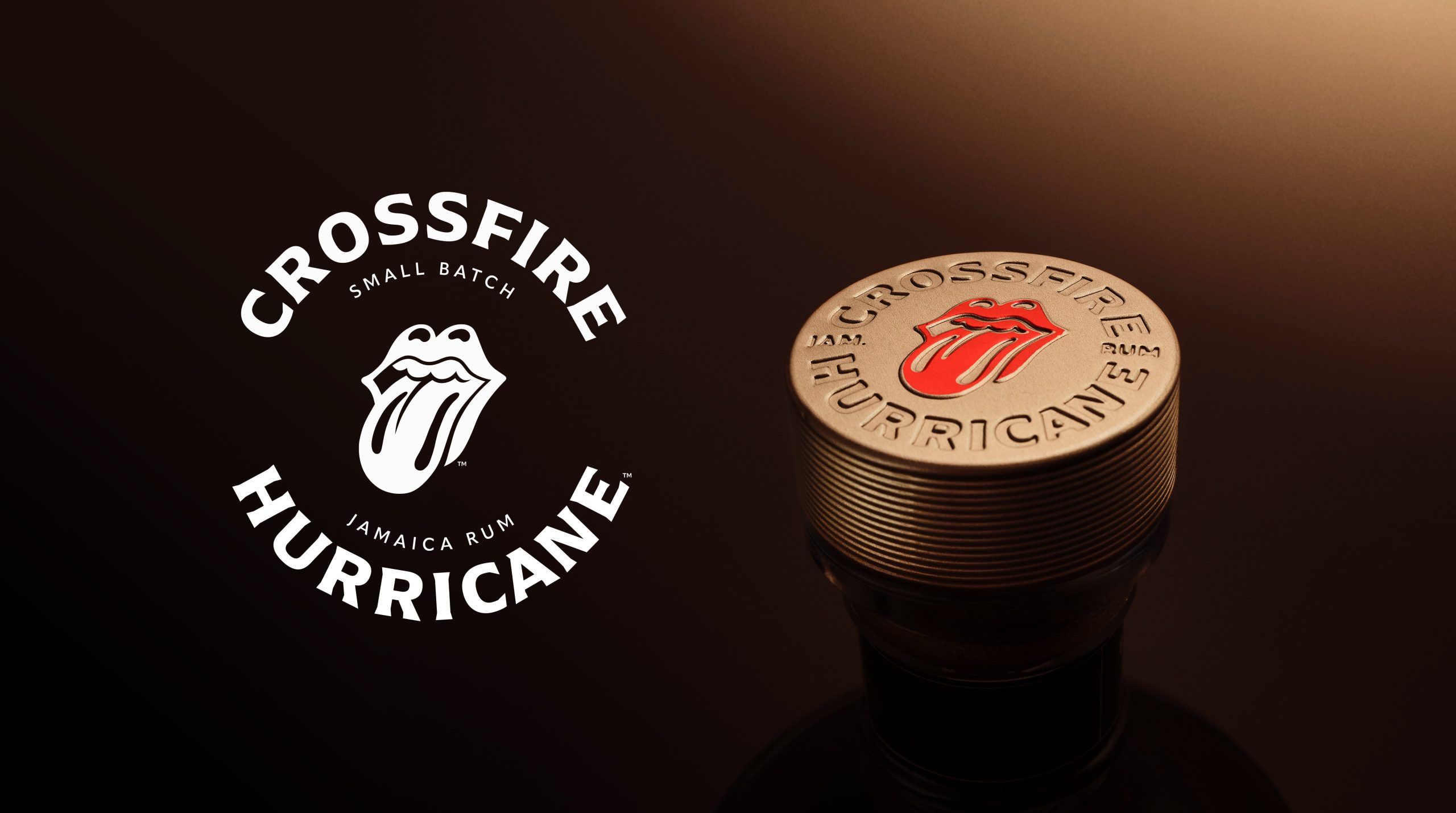
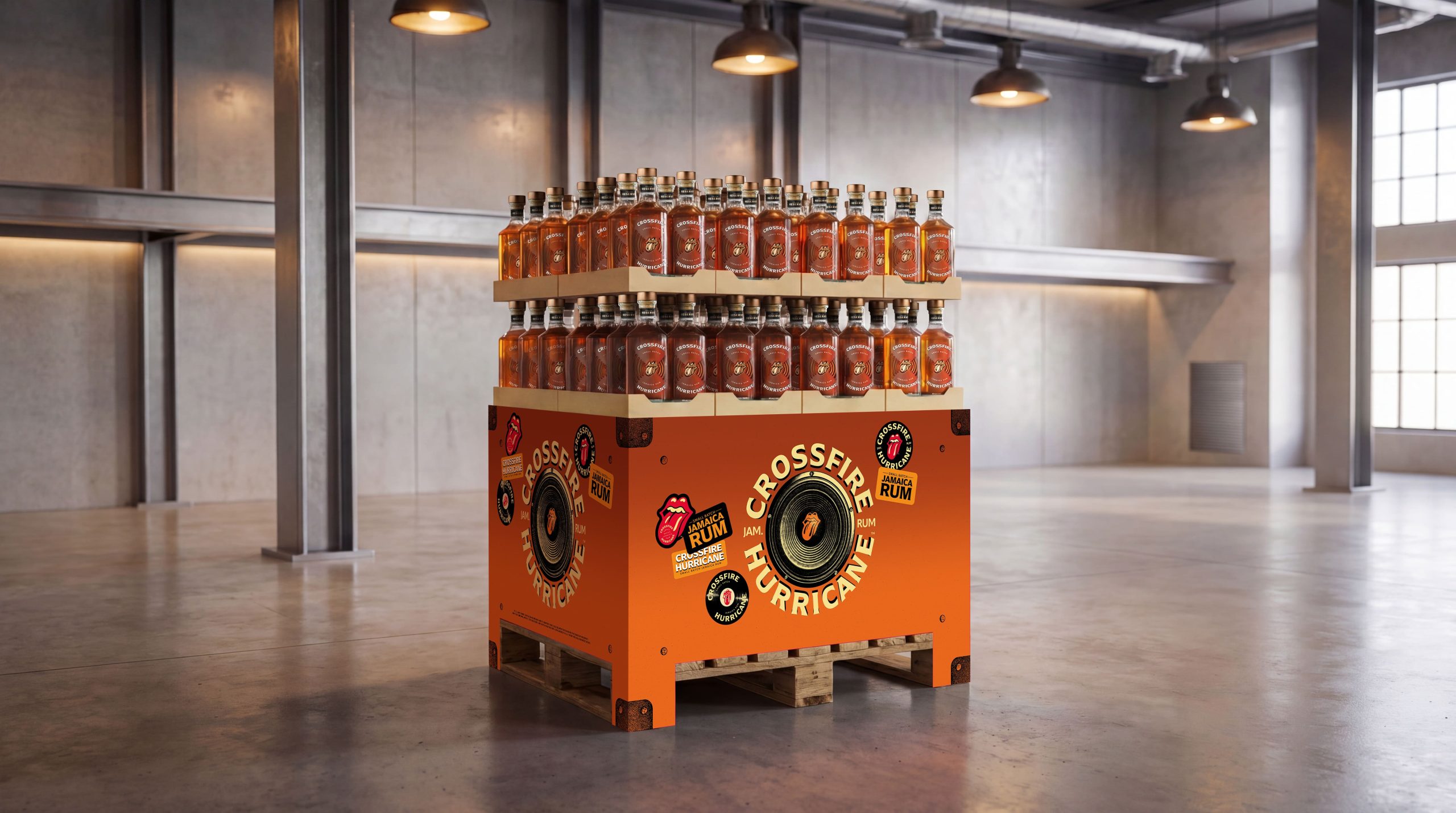
The identity system is built on the physics of sound. The wordmark, the tongue symbol, and the brand name set in ARPONA Bold expand and contract along speaker wave patterns. The texture language of folded paper, vinyl surfaces, and vintage metal is structural, not decorative. Every format breathes with the rhythm the brand was born.
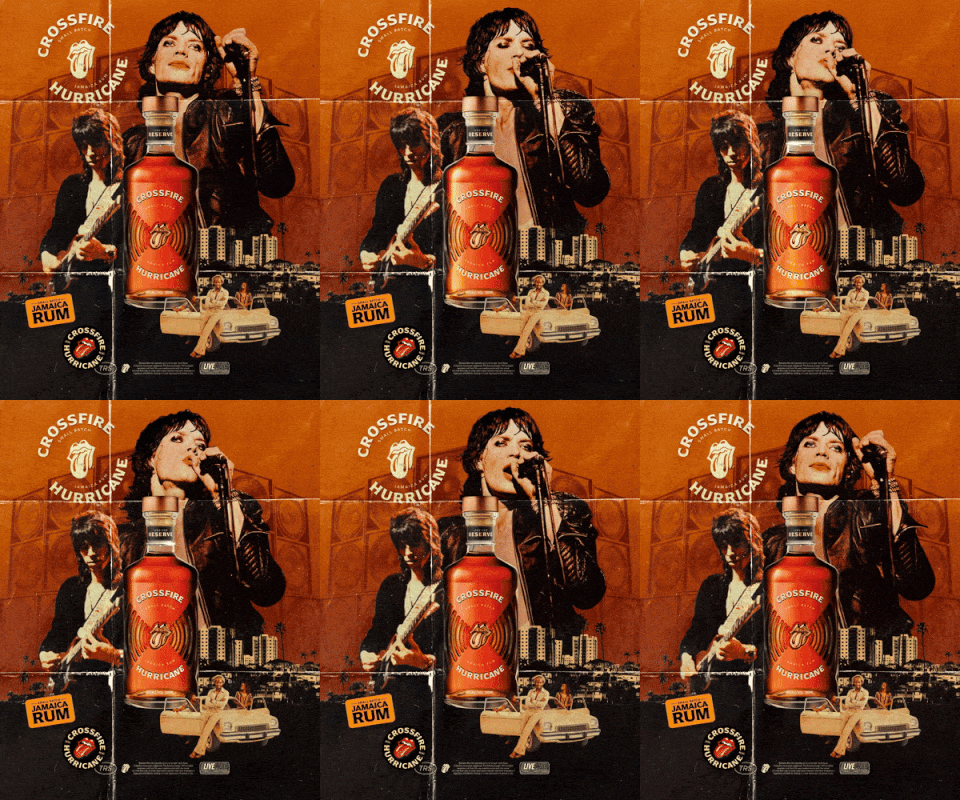
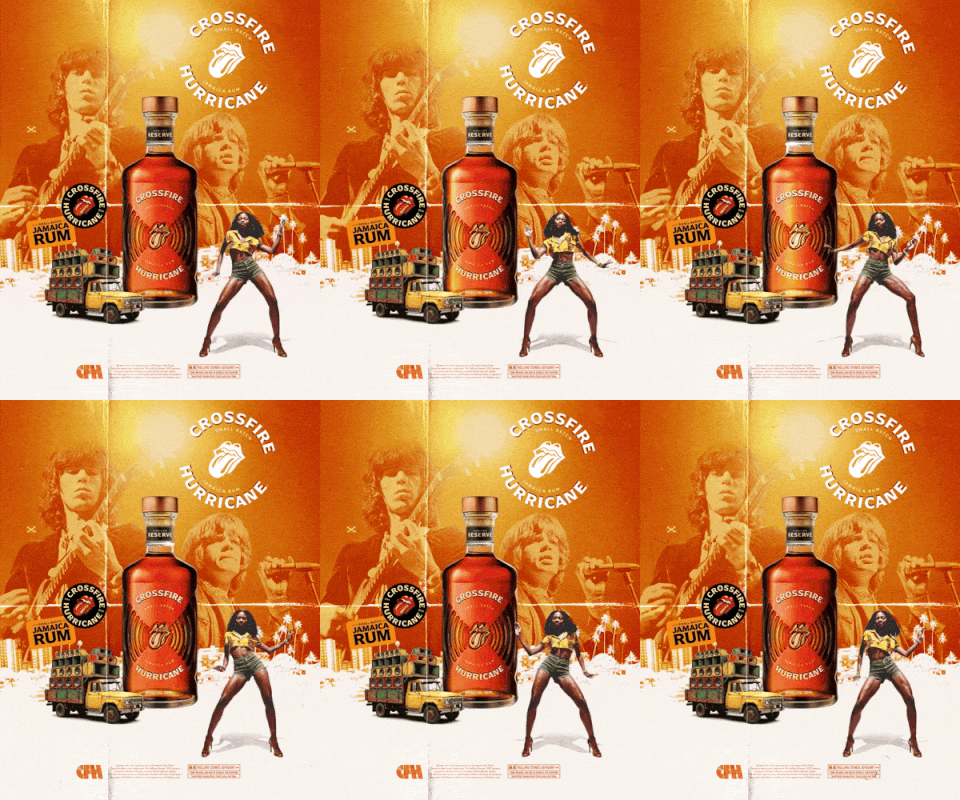
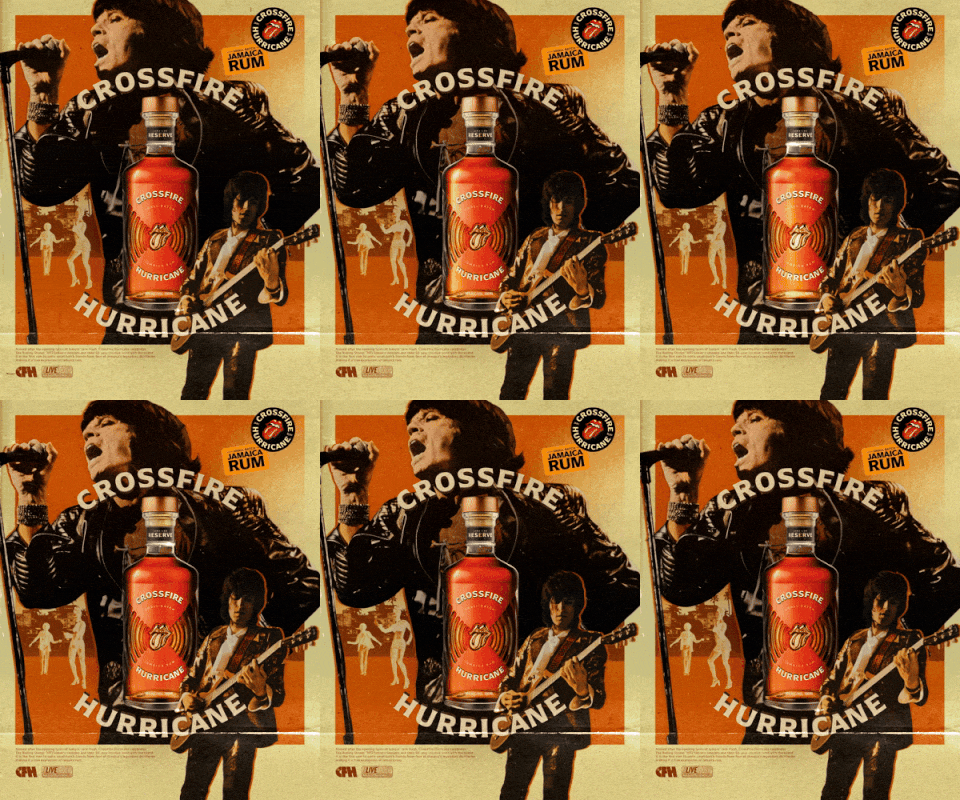
The print campaign is also produced in motion. Movement is built into the original creative logic from the start, designed to live across digital out-of-home, social, and editorial. Across every execution, one principle holds: the bottle is the main character. The musicians, the dancers, the street scenes are its stage. The work is not an interpretation of the brand. It is the brand made coherent.
Farid Mokart, Creative Chairman of Fred & Farid New York: “What happened in Jamaica in 1972 was a real encounter between two cultures, in a real place, with no filter in between. That kind of encounter is rare today. Our job was not to dramatize it. Our job was to make it visible. Two real archives in a single frame, a bottle as the main character, sound as the underlying logic. The work is what the moment looked like.”
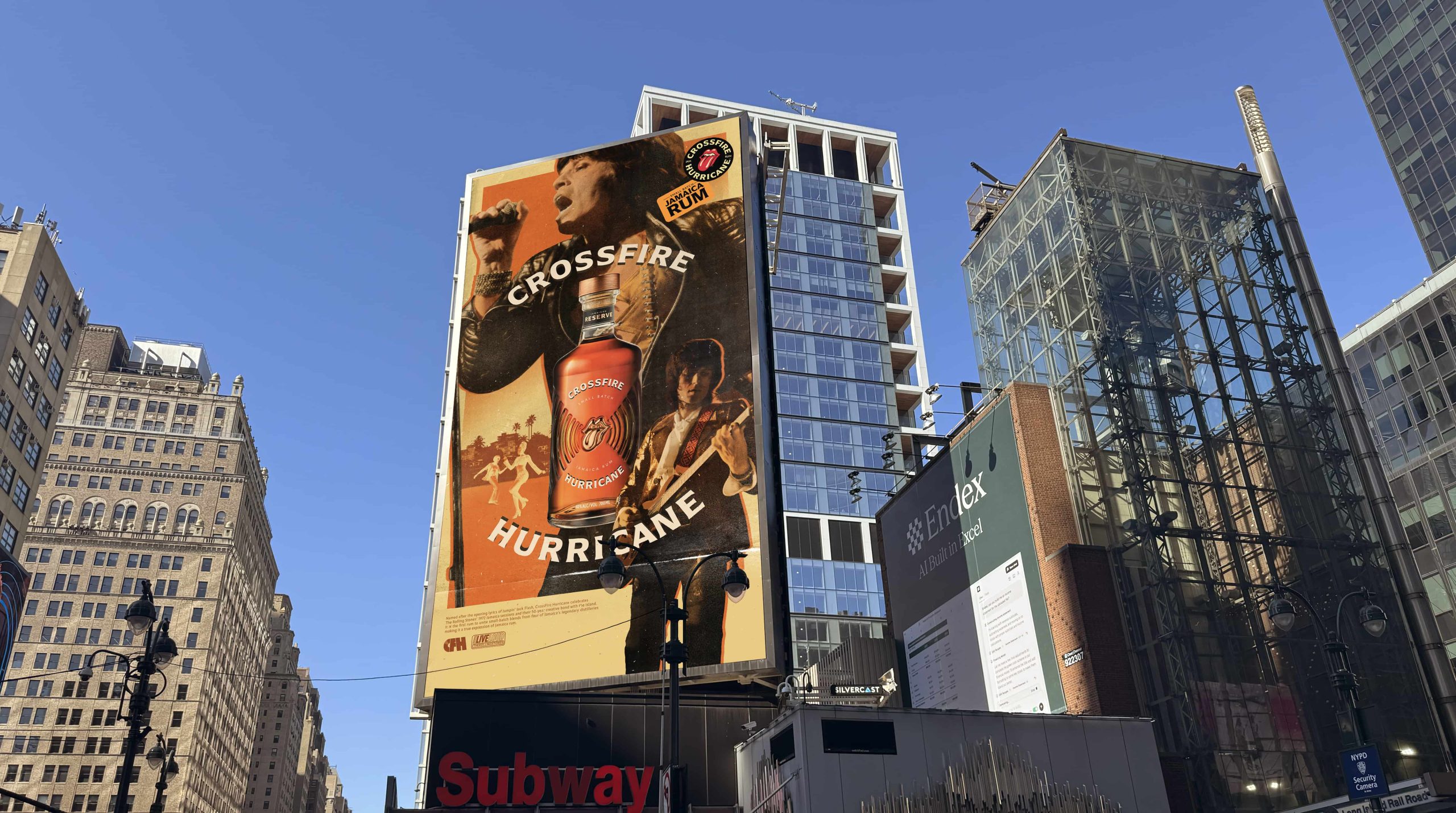
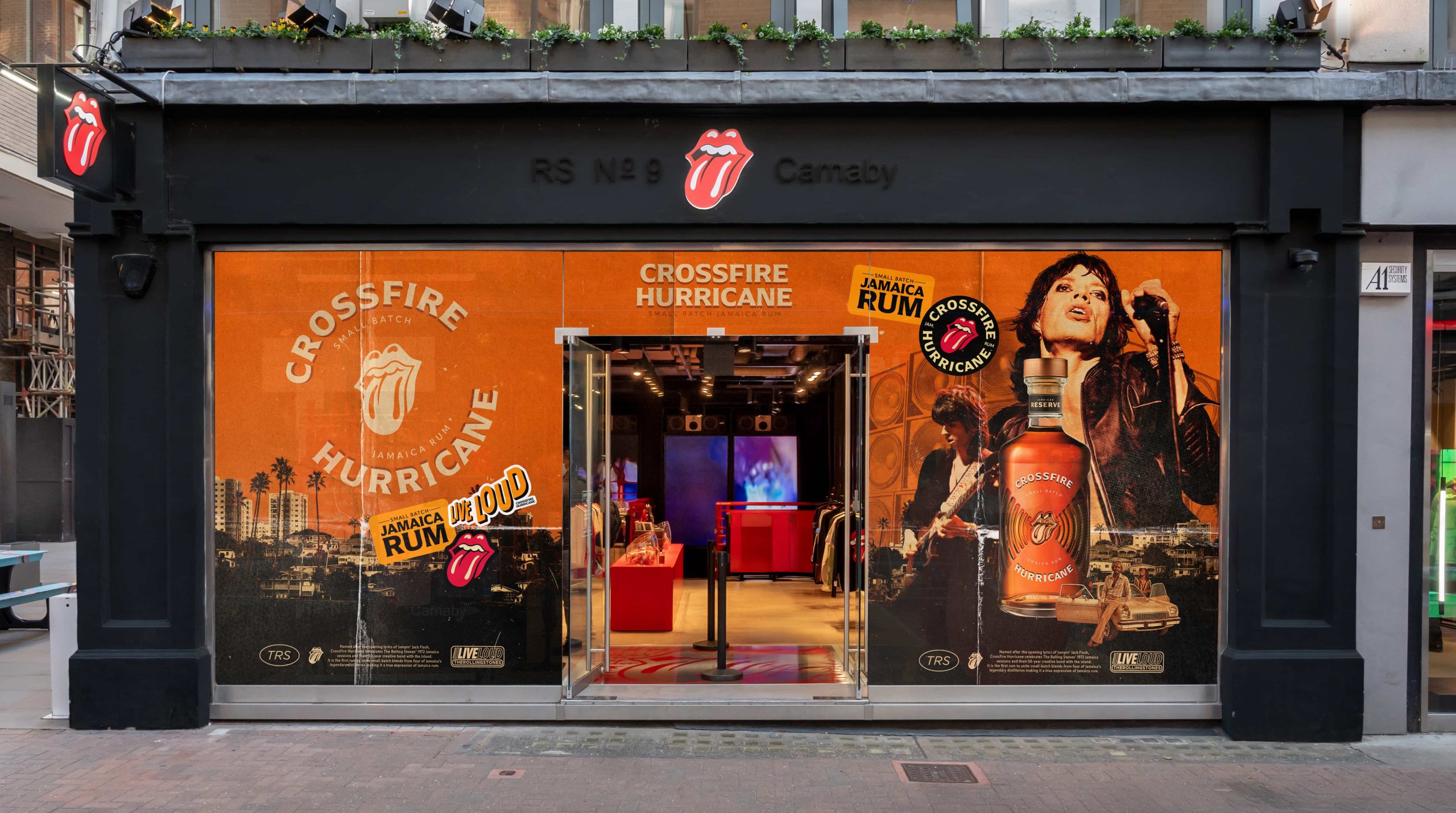
Source: Fred & Farid New York

The Rolling Stones’ Premium Rum Launches in 2026 With a Complete Brand Reconstruction by Fred & Farid New York, Built on the Cultural Encounter That Made the Brand Possible added by newsroom on
View all posts by newsroom →
You must be logged in to post a comment Login